Best LED Bulbs for Renters: Brighten Your Apartment Without Rewiring (2026 Guide)
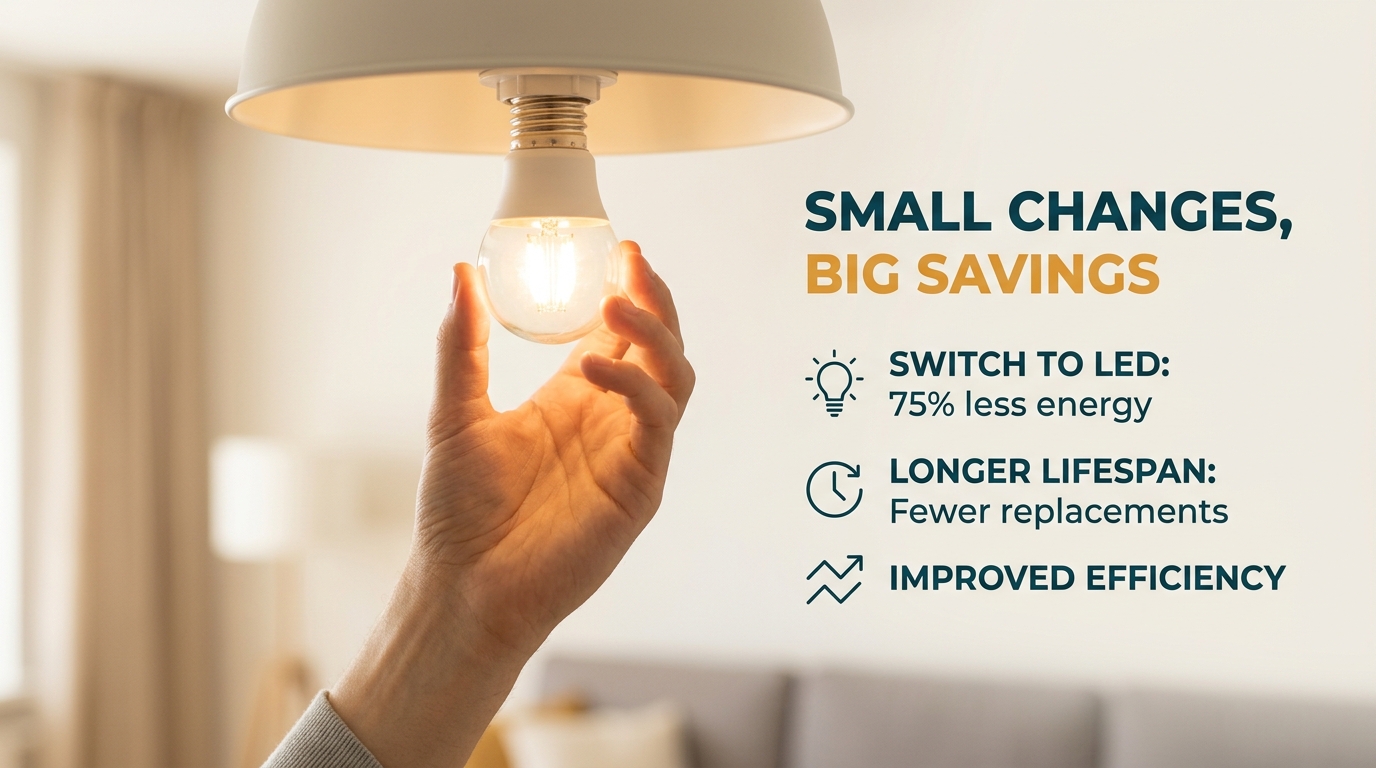
Best LED bulbs for renters: bright, efficient, zero wiring
By WattDweller Editorial Team · Updated September 24, 2026
Here’s the frustrating truth about rental lighting: you can’t change the fixtures, but you can change the bulbs.
And that single swap — a 30-second task with no tools, no landlord permission, and no risk to your security deposit — is one of the highest-ROI energy upgrades available to any renter. In fact, lighting accounts for roughly 10–15% of a typical apartment’s electricity bill, and most rental units still use outdated incandescent or halogen bulbs that consume 5–8x more electricity than modern LEDs.
According to the U.S. Department of Energy, replacing just five of your apartment’s most-used light bulbs with ENERGY STAR-certified LEDs can save you $75 per year in electricity costs — and since LEDs last 15,000–25,000 hours (versus 1,000 hours for incandescent), you’ll rarely think about bulbs again.
But here’s where most renters get stuck: the bulb aisle is confusing. Watts vs. lumens. Kelvin ratings. Smart bulbs. Multi-packs. It’s easy to grab the wrong thing and end up with a light that feels like a hospital hallway or a cave.
This guide cuts through the confusion. We’ll show you exactly how to choose the right LED bulbs for every room in your apartment, which specific products deliver the best value for renters, and how much you can actually save.
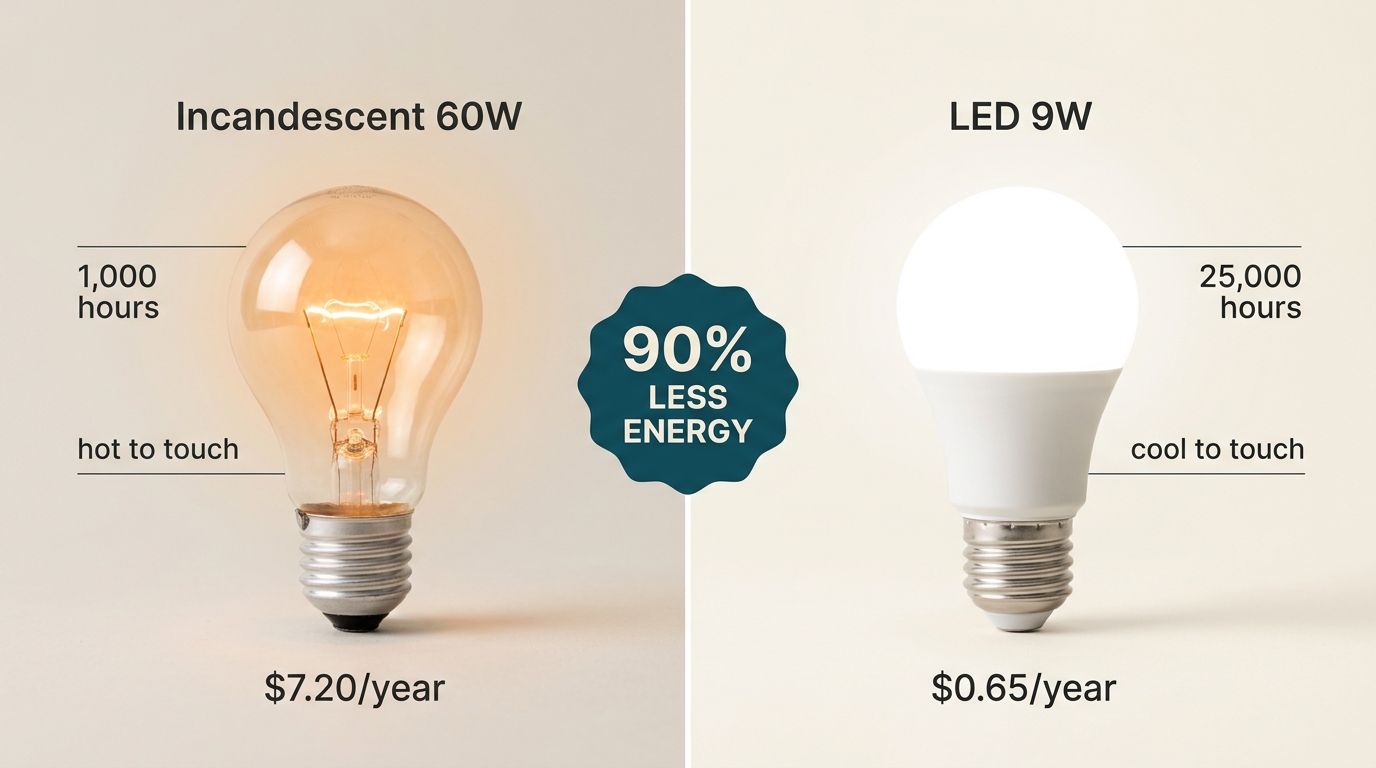
LED vs incandescent: same light, 75–80% less energy
Quick Summary: The Renter’s LED Cheat Sheet
If you’re short on time, here’s everything you need to know:
| What Matters | What to Look For | Common Mistake |
|---|---|---|
| Brightness | Lumens, not watts. 800lm ≈ old 60W bulb | Buying “60W equivalent” by wattage |
| Color Temperature | 2700K for bedroom/living, 4000K for kitchen/office | Using one color temp everywhere |
| Bulb Base | Check your fixture: E26 (standard) or E12 (candelabra) | Buying E26 for a candelabra socket |
| Smart vs. Standard | Smart for circadian scheduling, standard for budget | Overpaying for smart features you won’t use |
| Quantity | Buy multi-packs for consistency and savings | Mixing brands = mismatched color temp |
Bottom line: LEDs are the easiest win for renters. You’ll save money, the light will look better, and you can take every bulb with you when you move.
🛒 Check Philips Selectable White on Amazon💡 Want our top pick? The Philips Selectable White LED is the single best bulb for renters — one SKU covers five color temperatures, so you can tune it per room without buying different bulbs.
Now let’s break it down.
Chapter 1: Why LED Bulbs Are the Perfect Renter Upgrade
If you’re a renter, you’ve probably been told “you can’t make major changes” so many times that you’ve stopped looking for upgrades entirely. But lighting is different.
No Wiring. No Tools. No Permission.
Replacing a light bulb is not a modification — it’s maintenance. You’re not touching the wiring, not installing a fixture, and not altering the property in any permanent way. When you move out, you simply screw the old bulbs back in.
This matters because rental lighting is often an afterthought. Most rental apartments come with ceiling fixtures using 4000–6000K bulbs — the cool, blue-white spectrum that’s energizing for a workspace but stressful for a home. The bulbs are usually whatever was cheapest when the building was last maintained.
Replacing those bulbs with warm white LEDs instantly transforms the feel of your apartment from “institutional” to “home.”
The Renter’s Four Advantages
| Advantage | What It Means for You |
|---|---|
| Portable | Take every bulb with you when you move |
| Reversible | Store the landlord’s bulbs and swap back at move-out |
| Cheap to Start | A 4-pack of quality LEDs costs $10–$15 |
| Immediate ROI | Most bulbs pay for themselves in 2–4 months |
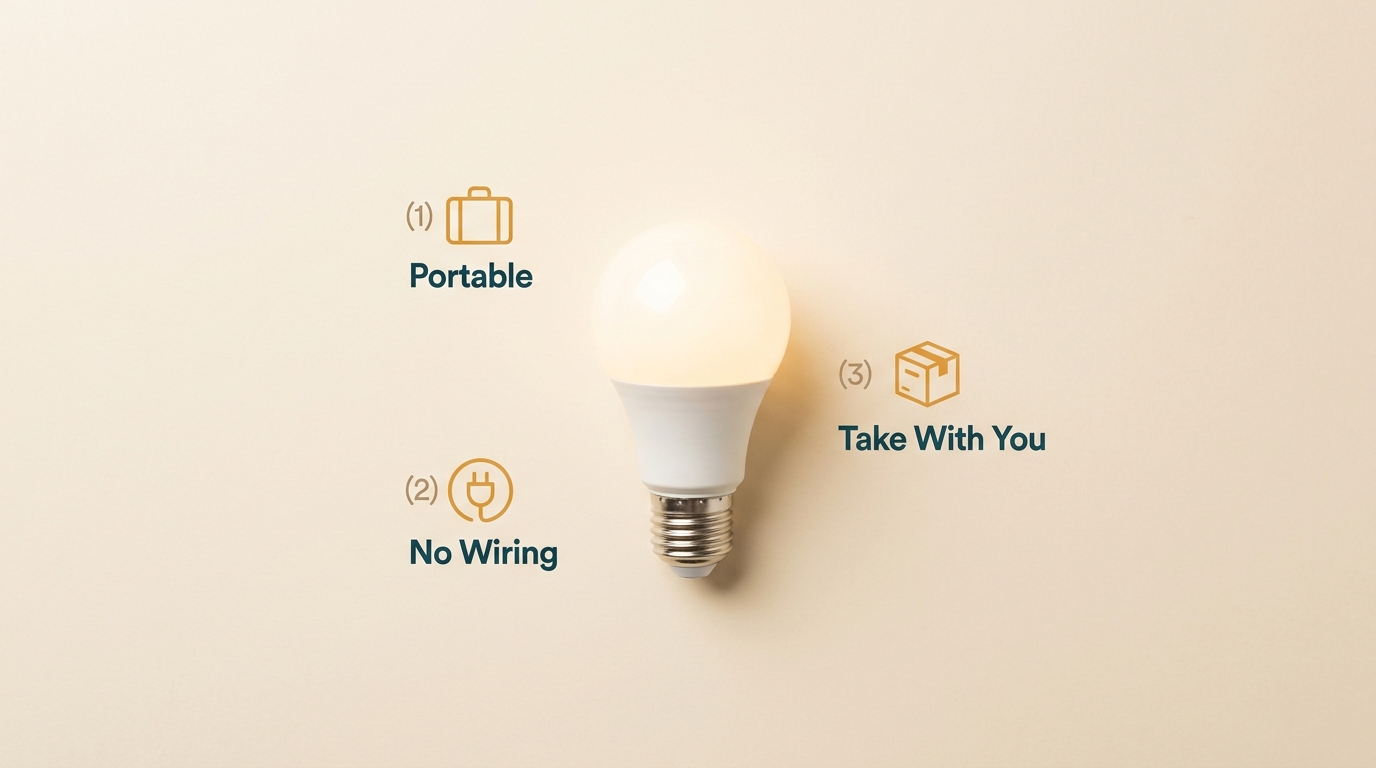
Why LEDs are the renter’s best lighting upgrade
How Much Can You Actually Save?
The math is simple and dramatic:
Formula: (Old wattage − New wattage) × Hours per day × 365 ÷ 1000 = Annual kWh saved
Example: Replacing a 60W incandescent bulb with an 8W LED, used 3 hours per day:
(60 − 8) × 3 × 365 ÷ 1000 = 56.9 kWh per year saved
At an average U.S. rate of $0.16/kWh:
56.9 kWh × $0.16 = $9.11 saved per year, per bulb
That doesn’t sound like much for one bulb. But a typical apartment has 15–20 light bulbs. Replace all of them:
- 15 bulbs × $9.11 = $137/year saved
- 20 bulbs × $9.11 = $182/year saved
And that’s a conservative estimate. If your apartment has bulbs that are on for 5+ hours per day (kitchen, living room, home office), your savings will be higher.
💡 The payback math: A quality LED bulb costs $2–$4. At $9.11 saved per year, it pays for itself in 3–5 months. After that, every day is pure savings.
The Cool Bonus: Your Apartment Gets More Comfortable
LEDs don’t just save money — they change how your apartment feels.
Incandescent and halogen bulbs waste 90% of their energy as heat. That heat isn’t just wasteful; in a small apartment, it can make a room uncomfortably warm. LEDs run cool, which means:
- No more “hot ceiling” feeling in summer
- Less strain on your AC (which saves even more money)
- Safer operation in enclosed fixtures and lampshades
Chapter 2: Understanding LED Specs (Without a Physics Degree)
The reason most people buy the wrong bulb is simple: they shop by watts instead of lumens. Watts measure energy consumption, not brightness. Lumens measure brightness. Once you flip that mental model, everything gets easier.
Lumens: How Bright Is It, Really?
Lumens (lm) tell you how much light a bulb actually produces. Here’s the cheat sheet for matching old bulbs to new LEDs:
| Old Incandescent | LED Equivalent | Typical Lumens | Best For |
|---|---|---|---|
| 40W | 5–6W | 450 lm | Accent lighting, hallways |
| 60W | 8–9W | 800 lm | Bedrooms, living rooms |
| 75W | 11–12W | 1,100 lm | Kitchens, home offices |
| 100W | 13–15W | 1,600 lm | Large living areas, task lighting |
| 150W | 18–20W | 2,600 lm | Rarely needed in apartments |
Renter rule of thumb: When you’re replacing a bulb, look at the old bulb’s wattage, then find the LED with the matching lumens from the table above. Ignore the LED’s wattage — it’ll always be lower.
💡 Pro tip: If you’re not sure what wattage your old bulb is, bring it to the store. Or, check the fixture’s max wattage rating (printed on a sticker inside the socket housing). Never exceed that rating — but LEDs always run cooler and use less, so you’re safely under it.
Kelvin: What Color Is the Light?
Kelvin (K) measures color temperature, not heat. This is the single most important spec for making your apartment feel like home instead of a dentist’s office.
| Kelvin | Name | Feel | Best Rooms |
|---|---|---|---|
| 2200K | Warm Amber | Cozy, candlelight | Bedrooms, evening ambiance |
| 2700K | Soft White | Warm, traditional | Living rooms, bedrooms (default choice) |
| 3000K | Warm White | Slightly warmer than neutral | Kitchens, dining rooms |
| 4000K | Cool White | Crisp, modern | Bathrooms, laundry rooms |
| 5000K–6500K | Daylight | Clinical, bluish | Avoid in apartments — this is what makes rentals feel cold |
Renter warning: Most rental apartments come with 4000K–6500K bulbs in the ceiling fixtures because they’re cheap and bright. This is why your apartment feels sterile. Swap them to 2700K immediately — it’s the single fastest way to make a rental feel warmer and more personal.
One exception: For task lighting (desk lamp, above the kitchen counter, bathroom mirror), 4000K is actually better. It’s more accurate for reading, cooking, and putting on makeup.
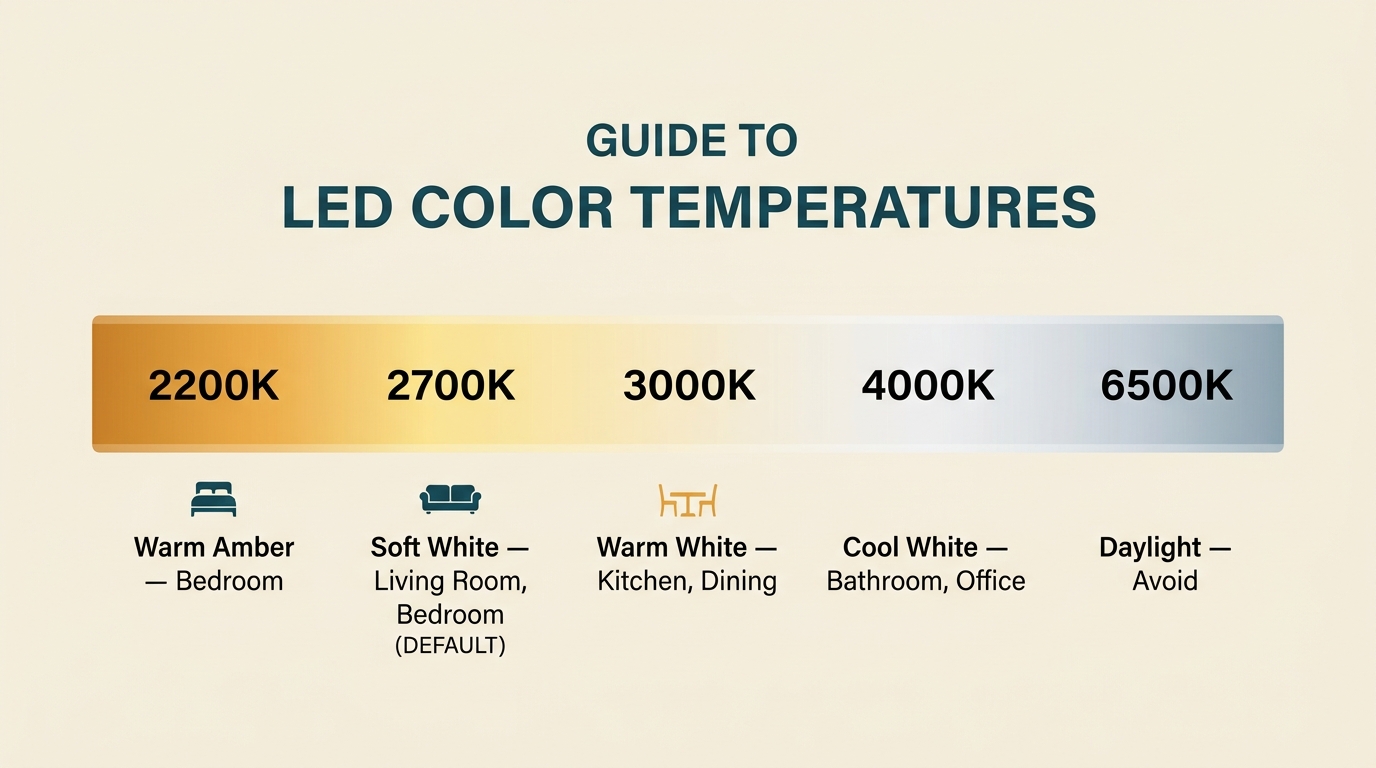
Kelvin scale: warm white vs cool white vs daylight
Wattage: How Much Energy It Uses
This is the number you want to minimize, not maximize. A modern LED uses 80–90% less energy than an equivalent incandescent bulb. A bulb labeled “60W equivalent” typically uses only 8–9W.
Lower wattage = lower electricity bill. Period.
Base Type: The One Spec People Forget
Before you buy, you need to know what base your fixture uses. In the U.S., there are two you’ll encounter in apartments:
| Base | Name | Where You’ll Find It |
|---|---|---|
| E26 | Medium / Standard | Almost all ceiling fixtures, floor lamps, table lamps |
| E12 | Candelabra | Chandeliers, wall sconces, some bathroom vanity lights |
| GU10 / GU24 | Pin base | Recessed ceiling lights (common in newer apartments) |
| T8 / T12 | Tube | Under-cabinet kitchen lighting, garage fixtures |
Renter hack: Before ordering, unscrew one bulb from each fixture type in your apartment and check the base. Take a photo. This 5-minute step saves you from ordering a 4-pack of the wrong bulbs.
⚠️ Common mistake: Buying E26 bulbs for a bathroom vanity fixture that uses E12 candelabra bases. They won’t fit — and the return shipping often costs more than the bulbs.
Other Specs That Matter
| Spec | What It Means | Why You Care |
|---|---|---|
| CRI (Color Rendering Index) | 0–100 score of how accurately colors appear | Aim for CRI 80+, ideally 90+ for bedroom/living room |
| Dimmable | Whether the bulb works with dimmer switches | Check if your fixture has a dimmer first |
| Lifespan | Rated hours before failure | 15,000+ hours is standard for quality LEDs |
| Beam Angle | How wide the light spreads | 220°+ for general lighting, narrower for spotlights |
| Smart Features | Wi-Fi, Bluetooth, app control | Only worth it if you’ll actually use scheduling |
Chapter 3: The Best LED Bulbs for Apartments (Top Picks)
Now that you understand the specs, here are our top picks for renters. We’ve kept it focused: three bulbs cover 95% of rental apartments, and each one is a proven performer.
1. Best Overall for Renters: Philips LED Selectable White A19 (5-CCT)
Why we recommend it:
- One bulb, five color temperatures: Tune it from 2700K (warm) to 5000K (daylight) with a simple switch on the bulb. Perfect for renters who want one SKU for the whole apartment.
- High CRI: Colors look natural across all settings
- Reliable brand: Philips is a proven name in LED tech
- Available in multi-packs: Great value for outfitting an entire apartment
- Flicker-free: No annoying buzz or shimmer
Best for: Living room, bedroom, kitchen, home office — literally every standard E26 fixture in your apartment.
Specs:
- Wattage: 8W (60W equivalent)
- Lumens: 800
- Color Temp: Selectable 2700K / 3000K / 3500K / 4000K / 5000K
- Base: E26
- Lifespan: 15,000 hours
- Dimmable: Yes
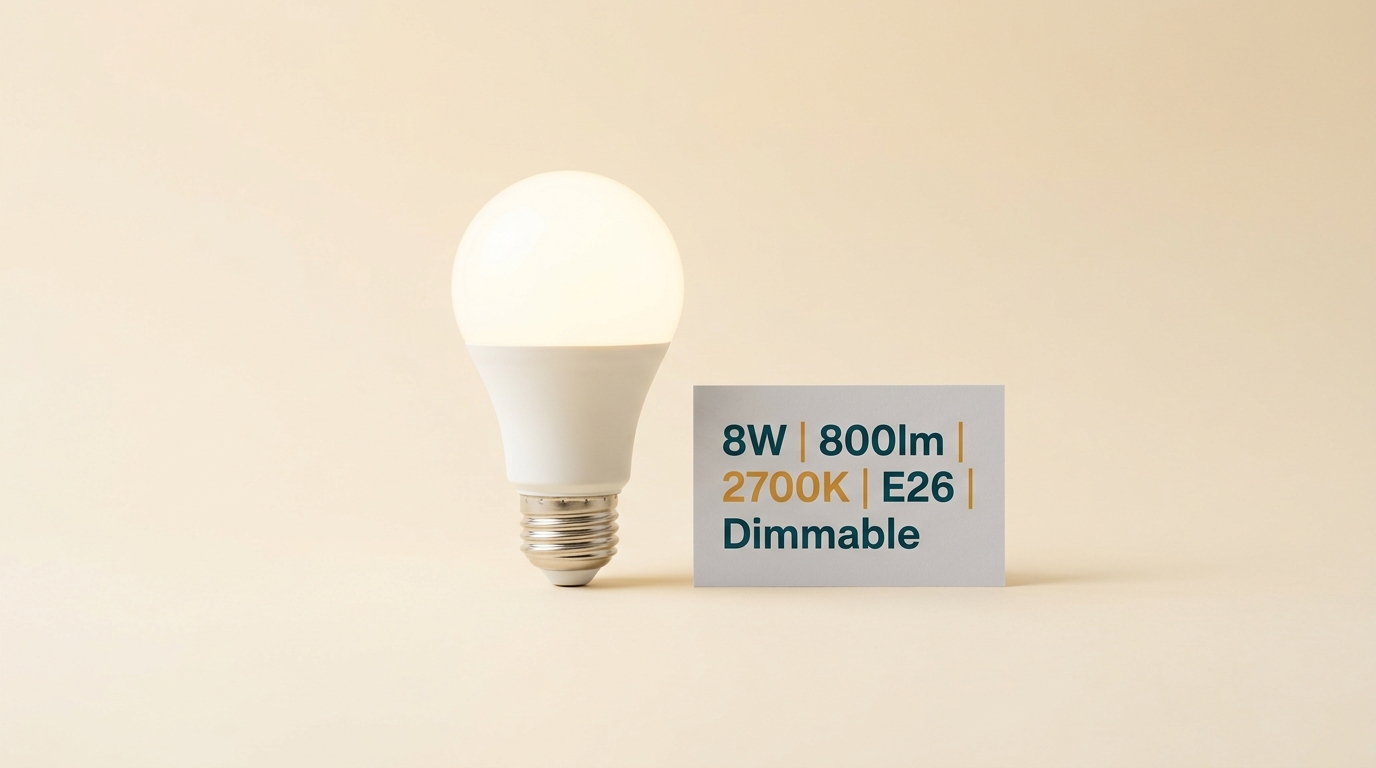
Philips Selectable White — one bulb, five color temperatures
2. Best Candelabra Base: Philips LED Candelabra E12 (2700K)
Why we recommend it:
- E12 base: Fits chandeliers and bathroom vanities that use candelabra sockets
- Soft white (2700K): Warm, inviting glow
- Smooth dimming: Works with most modern dimmers
- Same Philips reliability as our #1 pick
Best for: Bathroom vanity, dining room chandelier, wall sconces.
Specs:
- Wattage: 5.5W (60W equivalent)
- Lumens: 500
- Color Temp: 2700K
- Base: E12 (Candelabra)
- Lifespan: 15,000 hours
- Dimmable: Yes
3. Best Smart LED: Philips Hue White Starter Kit
Why we recommend it:
- App control: Schedule lights, dim remotely, set scenes
- Circadian lighting: Automate warm light in the evening, brighter light in the morning
- Works with Alexa, Google Home, Apple HomeKit
- Renter-friendly: Take the bulbs (and the Hue Bridge) with you when you move
- Starter kit includes the Bridge: No hidden hub cost
Best for: Living room or bedroom where you want scheduling, ambiance control, and smart home integration.
Specs:
- Wattage: 9.5W (60W equivalent)
- Lumens: 800
- Color Temp: 2700K (adjustable with Hue Bridge)
- Base: E26
- Lifespan: 25,000 hours
- Dimmable: Yes (via app or switch)
- Smart: Yes (Bluetooth direct or Hue Bridge)
Trade-off: More expensive per bulb ($15–$25 each). Worth it if you’ll actually use smart features. Skip it if you just want savings.
🛒 Check Philips Hue Starter Kit on Amazon💡 Want more smart lighting options? Our upcoming guide Smart Lighting Without Rewiring will cover the full ecosystem — Hue, Wyze, Govee, and more.
Chapter 4: How to Pick the Right Bulb for Every Room
The three bulbs above cover the types of fixtures. Now let’s map them to the rooms in your apartment — because the right color temperature depends on what you do in each space.
Kitchen: 4000K + Higher Lumens
The kitchen is a task environment. You’re chopping, cooking, reading labels, and cleaning. Cool white (4000K) keeps you alert and makes it easier to spot doneness and grime.
- Bulb: Philips Selectable White, set to 4000K
- Lumens: 800–1,100
- Tip: If your kitchen has a single ceiling fixture, consider adding an under-cabinet LED strip for task lighting (renters can use adhesive-backed strips).
Bathroom: 4000K for Vanity, 2700K for Ambiance
Bathrooms are split-use. The vanity mirror is a task zone (4000K is better for makeup and shaving). But if you have a separate ceiling light, 2700K feels warmer and less clinical.
- Vanity: Philips Candelabra E12 at 2700K (warm, flattering), or Selectable White set to 4000K for accuracy
- Ceiling: Selectable White at 2700K
- Tip: If your vanity fixture takes E12 candelabra bulbs, don’t try to force E26 bulbs — they won’t fit.
Living Room: 2700K + Dimmable
The living room is where you relax, watch TV, and host. Warm white (2700K) is the default. If you have a dimmer, choose a dimmable bulb — otherwise dimming can flicker.
- Bulb: Philips Selectable White, set to 2700K
- Lumens: 800
- Smart option: Philips Hue Starter Kit for scene control and scheduling
Bedroom: 2700K + Smart Scheduling
Bedrooms benefit most from circadian lighting — warm and dim in the evening, brighter in the morning. This is where smart bulbs earn their premium.
- Bulb: Philips Hue Starter Kit, scheduled to shift from 2700K to 4000K in the morning
- Budget alternative: Philips Selectable White, set to 2700K
- Tip: Avoid 4000K+ in the bedroom — it suppresses melatonin and makes it harder to fall asleep.
Home Office: 4000K + Higher CRI
If you work from home, the office is a task zone. 4000K keeps you focused, and higher CRI (90+) reduces eye strain when reading screens and documents.
- Bulb: Philips Selectable White, set to 4000K
- Lumens: 800–1,100
- Tip: Position light to avoid glare on your monitor — bias lighting behind the screen helps.
Hallway / Closet: 2700K, Lower Priority
These are low-use spaces. Any warm LED works. If you’re outfitting a whole apartment, use your leftover bulbs here.
- Bulb: Philips Selectable White at 2700K, or any spare warm LED
- Tip: Motion-sensor bulbs are renter-friendly for hallways and closets, but they cost more per bulb. Skip unless you keep forgetting to turn lights off.
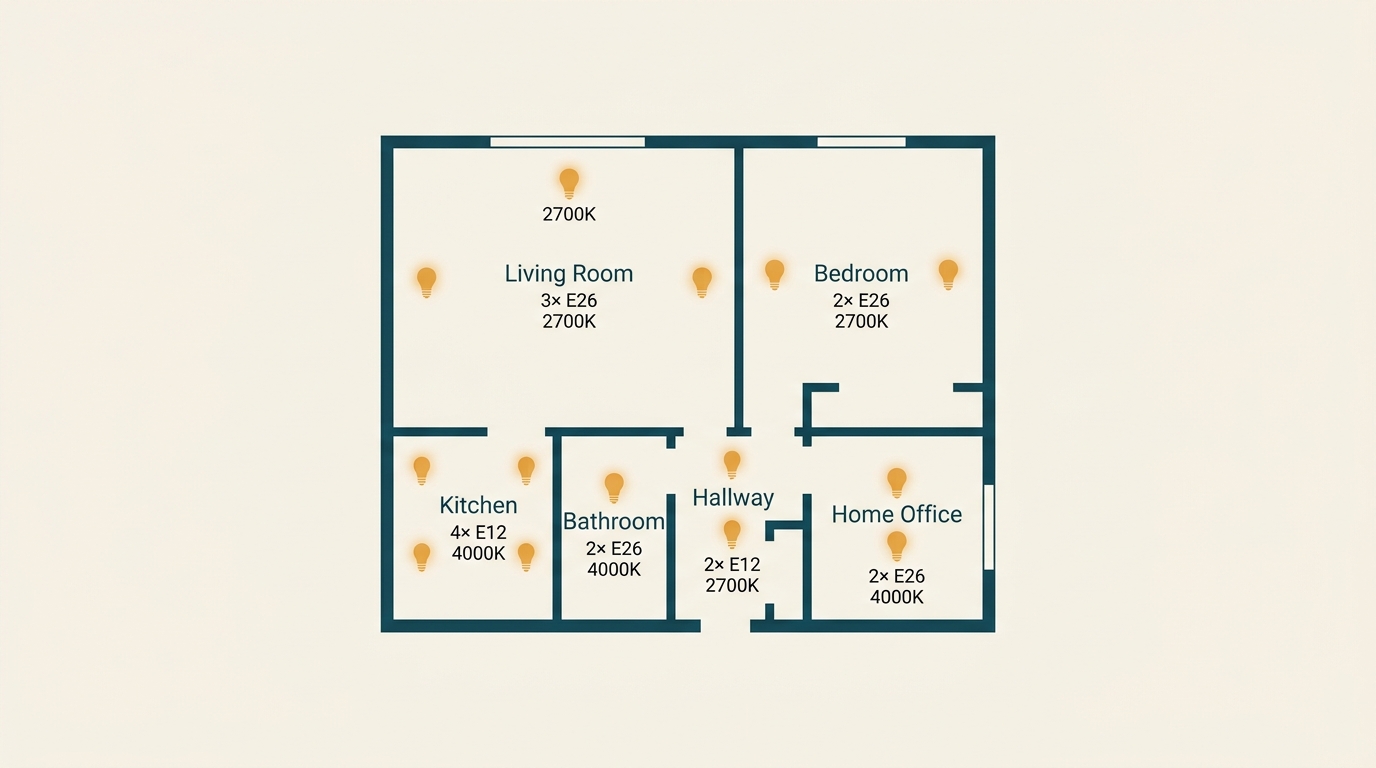
Room-by-room LED plan: which bulb goes where
Chapter 5: How Many Bulbs Do You Actually Need?
One of the most common mistakes renters make is under-buying. You swap out the living room bulbs, then realize the bedroom, kitchen, and bathroom all need the same treatment. By the time you go back to the store, the multi-pack deal is gone.
Here’s how to figure out your total count in 5 minutes.
Step 1: Walk Through Every Room
Grab a notepad (or your phone) and count every light bulb location in your apartment — not every bulb. Some fixtures use one bulb; others (like bathroom vanities) use two, three, or four.
Step 2: Note the Base Type for Each
For each location, check the base type. Most apartments break down like this:
| Room | Typical Fixture | Base Type | Typical Count |
|---|---|---|---|
| Living Room | Ceiling fixture or floor lamp | E26 | 2–4 |
| Bedroom | Ceiling fixture or bedside lamps | E26 | 2–4 |
| Kitchen | Ceiling or recessed | E26 or GU10 | 2–4 |
| Bathroom | Vanity bar | E12 or E26 | 2–4 |
| Hallway / Closet | Ceiling | E26 | 1–3 |
| Home Office | Desk lamp + overhead | E26 | 2–3 |
Average apartment total: 15–20 bulbs.
Step 3: Categorize by Room Type
Don’t buy the same bulb for every room. Instead, group them:
Warm White (2700K) — for living spaces:
- Living room
- Bedroom
- Hallway
- Dining area
Bright White (4000K) — for task areas:
- Kitchen
- Bathroom
- Home office
- Laundry room
This two-tier strategy gives you the comfort of warm light where you relax, and the clarity of cool light where you work.
💡 Why the Philips Selectable White wins: With one SKU, you can set 2700K in the living room and 4000K in the kitchen — without buying two different bulbs. It simplifies your entire apartment lighting plan.
Step 4: Buy in Multi-Packs
Most LED brands sell in 4-packs, 6-packs, or 8-packs. Buying in bulk:
- Reduces per-bulb cost by 30–50%
- Ensures color consistency (same manufacturing batch = same tint)
- Gives you spares for when a bulb eventually fails
Renter tip: Buy one extra 4-pack of your most-used bulb type. Store it in a closet. When a bulb burns out in 3 years, you’ll have a replacement that perfectly matches.
Sample Shopping List for a 1-Bedroom Apartment
Here’s what a typical 1-bedroom apartment needs:
| Item | Quantity | Where to Use |
|---|---|---|
| Philips Selectable White A19, E26 | 10 bulbs | Living room, bedroom, kitchen, home office, hallway |
| Philips Candelabra E12, 2700K | 4 bulbs | Bathroom vanity (if applicable) |
| Philips Hue Starter Kit | 1 kit (2 bulbs + hub) | Bedroom lamps (optional, for scheduling) |
Estimated total: $60–$110 (depending on whether you include the Hue starter kit).
Annual savings: $130–$180. Payback period: 3–5 months.
Chapter 6: Installation Tips (No Electrician Required)
Good news: replacing a light bulb is one of the few home improvements that literally anyone can do. But there are a few renter-specific tips that make the process smoother and safer.
Safety First (30 Seconds of Preparation)
- Turn off the light switch before you touch the bulb. If the light was recently on, the old bulb may be hot.
- Let it cool for 2–3 minutes if it was just on (especially incandescent/halogen).
- Use a step stool, not a chair. Chairs tip; step stools don’t.
- Never force a bulb. If it doesn’t screw in smoothly, stop — you may have the wrong base type.
The 60-Second Swap Process
- Turn off the switch.
- Wait 2–3 minutes for the old bulb to cool.
- Unscrew the old bulb counterclockwise.
- Save the old bulbs. Put them in a labeled ziplock bag (“Original bulbs — kitchen”). This matters at move-out.
- Screw in the new LED bulb clockwise until it’s snug (not tight).
- Turn on the switch and confirm it works.
Total time per bulb: 60 seconds. Total time for a full apartment: 20 minutes.
Renter-Specific Tips
Tip #1: Photograph Before You Swap
Take a photo of each fixture with the original bulb in it. This creates a visual record for move-out, and it helps you remember what was there.
Tip #2: Label the Original Bulbs
Use a permanent marker on a ziplock bag: “Living Room Ceiling,” “Bathroom Vanity.” When you move out, you’ll restore the apartment to its original state in minutes.
Tip #3: Check for Dimmer Compatibility
If your apartment has dimmer switches, not every LED bulb is compatible. Look for “dimmable” on the packaging and, ideally, a bulb that explicitly mentions compatibility with your dimmer brand (Lutron, Leviton, etc.). If you’re not sure, buy one bulb first and test it before buying a multi-pack.
Tip #4: Don’t Mix Brands in the Same Fixture
If a fixture uses 3 bulbs (like a bathroom vanity bar), use the same brand and model for all three. Mixing brands can produce slightly different color temperatures — and it looks noticeably off.
Tip #5: Watch for Enclosed Fixtures
Some LEDs don’t perform well in fully enclosed fixtures (like flush-mount ceiling lights with glass covers) because they can overheat. Look for bulbs labeled “enclosed fixture rated” if this applies to you.
💡 What if a bulb doesn’t fit? Don’t force it. Return it and buy the correct base. If you ordered online, most retailers accept returns for wrong-base bulbs within 30 days.
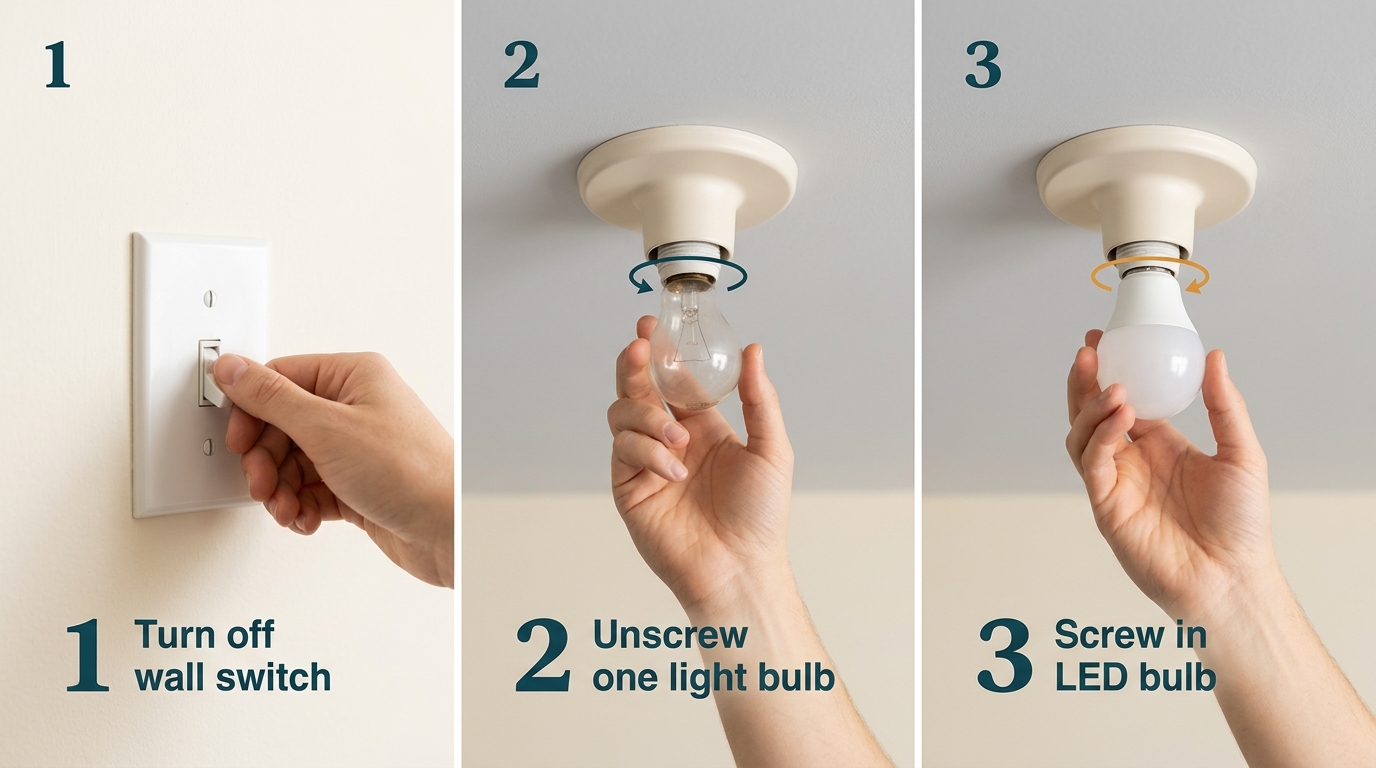
The 5-minute LED swap: no tools, no landlord, no risk
What About Hardwired Fixtures?
If your apartment has hardwired fixtures (like recessed ceiling lights), you cannot replace them without an electrician and landlord permission. But you can replace the bulbs inside them — which is where 90% of the energy savings come from.
Never attempt to rewire a fixture in a rental unit. Not only is it a lease violation, it’s also dangerous and often illegal without a licensed electrician.
How Much Can Renters Actually Save?
Let’s bring this home with real numbers. Your savings depend on:
- How many bulbs you replace
- The old bulbs’ wattage (incandescent = 60W, halogen = 43W, CFL = 13W)
- How many hours per day each bulb is on
- Your electricity rate
Scenario 1: The Average 1-Bedroom Renter (Conservative)
- Bulbs replaced: 15
- Old bulb type: 60W incandescent
- New bulb: 8W LED
- Average hours per day: 3
- Electricity rate: $0.16/kWh
Calculation:
(60 − 8) × 3 × 365 ÷ 1000 = 56.9 kWh saved per bulb per year 56.9 × 15 bulbs = 854 kWh saved per year 854 × $0.16 = $137 saved per year
Result: $137/year saved. Payback: ~3 months.
Scenario 2: The Home Office Renter (Moderate)
- Bulbs replaced: 18
- Old bulb type: 60W incandescent
- New bulb: 8W LED
- Average hours per day: 5 (more WFH hours)
- Electricity rate: $0.18/kWh (California)
Calculation:
(60 − 8) × 5 × 365 ÷ 1000 = 94.9 kWh saved per bulb per year 94.9 × 18 bulbs = 1,708 kWh saved per year 1,708 × $0.18 = $307 saved per year
Result: $307/year saved. Payback: ~2 months.
Scenario 3: The High-Rate Renter (Aggressive)
- Bulbs replaced: 20
- Old bulb type: 75W halogen (common in newer apartments)
- New bulb: 8W LED
- Average hours per day: 4
- Electricity rate: $0.35/kWh (Hawaii, or peak TOU rate)
Calculation:
(75 − 8) × 4 × 365 ÷ 1000 = 97.8 kWh saved per bulb per year 97.8 × 20 bulbs = 1,956 kWh saved per year 1,956 × $0.35 = $685 saved per year
Result: $685/year saved. Payback: ~1.5 months.
Summary Table
| Scenario | Bulbs | Hours/Day | Rate | Annual Savings |
|---|---|---|---|---|
| Conservative (1-bed) | 15 | 3 | $0.16 | $137 |
| Moderate (WFH) | 18 | 5 | $0.18 | $307 |
| Aggressive (Hawaii/peak) | 20 | 4 | $0.35 | $685 |
Realistic renter savings: $100–$300/year just from switching bulbs.
And unlike most energy upgrades, this one is completely reversible — you take the bulbs with you when you move.
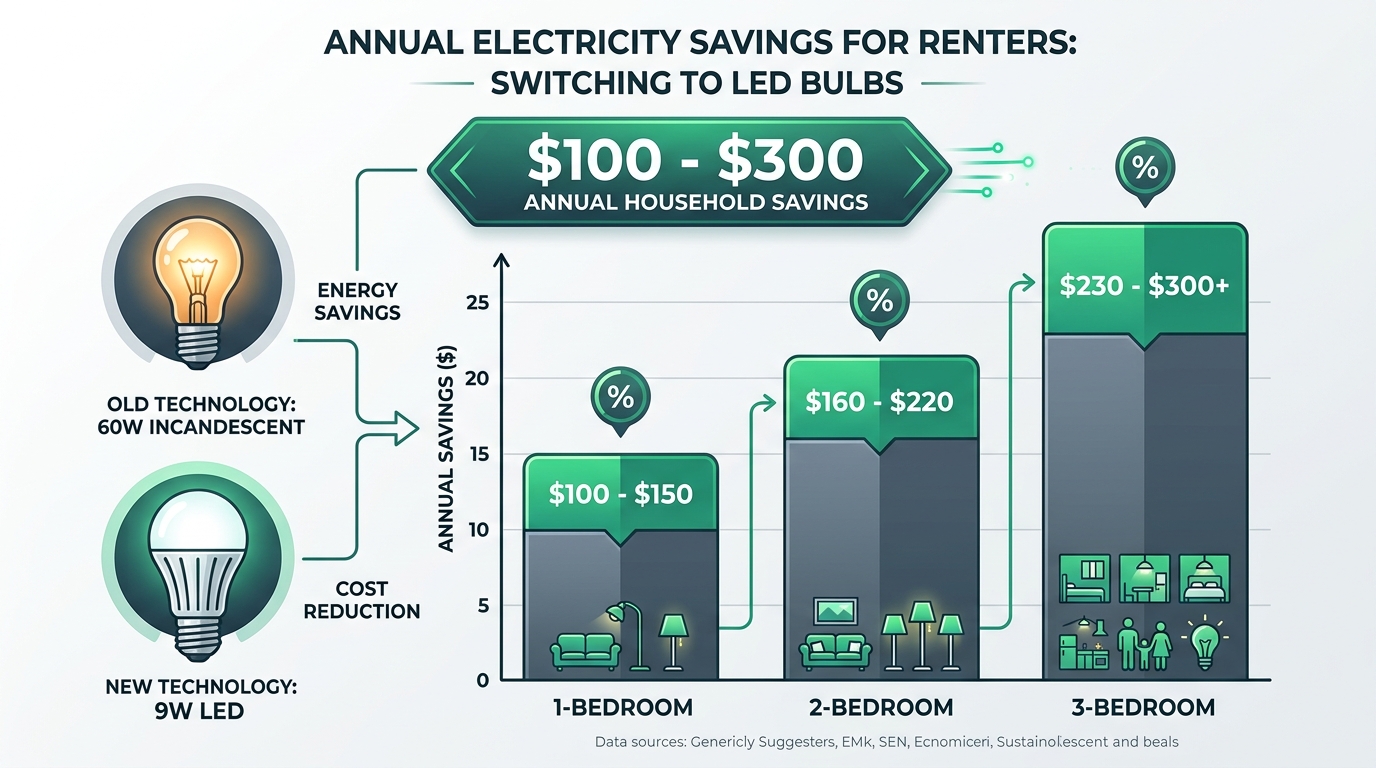
LED savings: $100 to $300 per year for a typical apartment home
Conclusion
LED bulbs are the simplest, cheapest, and most reversible energy upgrade available to any renter. There’s no wiring, no landlord permission, no lease risk, and no tools required. You unscrew one bulb, screw in another, and start saving money the moment you flip the switch.
The math is clear:
- 15–20 bulbs in a typical apartment
- $100–$300 per year in savings
- 2–5 months payback period
- 15,000–25,000 hours of lifespan (that’s 10+ years of normal use)
- Zero risk to your security deposit
And unlike almost every other energy upgrade, this one moves with you. When you leave your apartment, you pack up your bulbs, replace the originals, and take your savings to your next place.
Your action plan:
- Walk through every room in your apartment and count the bulbs. Note the base type (E26, E12, GU10) for each.
- Decide on color temperature per room. 2700K for living spaces, 4000K for kitchens and bathrooms. The Philips Selectable White covers both from one SKU.
- Buy quality LEDs in multi-packs. Start with the Selectable White for E26 fixtures, Candelabra E12 for vanity lights, and Hue Starter Kit if you want smart scheduling.
- Swap the bulbs. Save the originals in labeled ziplock bags for move-out.
- Track your savings by comparing your next 2–3 electricity bills to the previous 2–3.
- Take the bulbs with you when you move. They’re yours.
🛒 Check Philips Selectable White on AmazonNext step: Start with the bulb that covers the most fixtures in your apartment. The Philips Selectable White A19 is our top pick for renters — one SKU, five color temperatures, zero wiring.
If you haven’t already, read our Vampire Power in Rentals guide to find the 7 hidden devices draining your bill right now — and our How to Read Your Apartment Electricity Bill guide to understand exactly where your money goes each month.
Frequently Asked Questions
Are LED bulbs really worth it for renters who might move in a year?
Yes — because LEDs are portable. Unlike a smart thermostat or an installed fixture, LED bulbs unscrew in seconds and move with you. Even if you only stay in an apartment for 12 months, you’ll typically break even within 3–5 months and pocket the remaining savings. And if you move, the bulbs move with you.
Will LED bulbs work in my old apartment’s fixtures?
In almost all cases, yes. LEDs are designed to work in standard E26 and E12 sockets, which is what 95%+ of U.S. apartment fixtures use. The only exceptions are old dimmer switches (some are incompatible) and fully enclosed fixtures (some LEDs overheat). Check the packaging for “dimmable” and “enclosed fixture rated” if either applies to you.
Do I need to tell my landlord I’m replacing the bulbs?
No. Replacing a light bulb is considered routine maintenance, not a modification. You’re not altering the fixture, wiring, or structure. The only thing you need to do is save the original bulbs and swap them back before move-out. This is standard practice and protects your security deposit.
What’s the difference between 2700K, 3000K, and 4000K?
These are color temperature ratings measured in Kelvin:
- 2700K (Soft White): Warm, yellowish light. Best for living rooms, bedrooms, and anywhere you want to relax.
- 3000K (Warm White): Slightly whiter than 2700K. Good for kitchens and dining rooms.
- 4000K (Cool White): Crisp, neutral light. Best for bathrooms, home offices, and task lighting.
- 5000K–6500K (Daylight): Bluish, clinical. Avoid in apartments — it makes rentals feel cold.
Can I use smart bulbs in a rental apartment?
Absolutely. Smart bulbs like Philips Hue screw into standard sockets — no wiring required. You can control them via app, schedule them, and even set circadian lighting (warm in the evening, brighter in the morning). When you move, you unscrew the bulbs and take them (and their hub, if applicable) with you.
How do I dispose of old incandescent or CFL bulbs?
Incandescent bulbs can go in regular trash (they’re not hazardous). CFL bulbs contain small amounts of mercury and should be recycled at a Home Depot, Lowe’s, or local hazardous waste facility. Never throw CFLs in the trash.
About This Article
WattDweller is a reader-supported publication dedicated to helping renters reduce energy costs without permanent modifications.
For information about how we develop and review content, see our Editorial Policy.
Sources: Energy information cited in this article comes from the sources linked throughout the article, including the U.S. Department of Energy (DOE), ENERGY STAR, and the U.S. Energy Information Administration (EIA).
Last Updated: September 24, 2026
Related reading