Best Portable Power Stations for Apartments: Safe, Quiet Indoor Backup (2026)
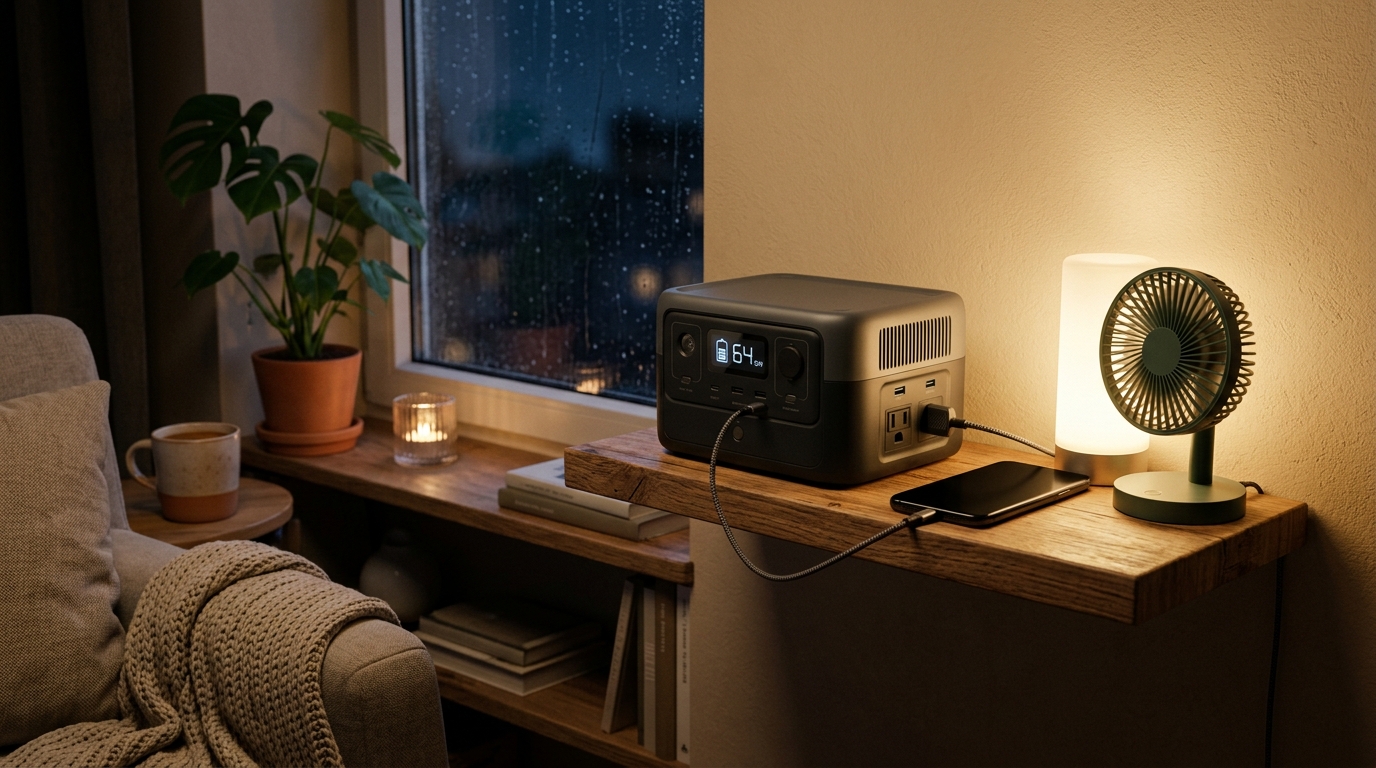
Portable power stations provide quiet, lease-friendly emergency electricity without fumes, gas storage, or landlord conflicts.
By WattDweller Editorial Team · Updated October 17, 2026
Living in an apartment or rented condominium creates a unique vulnerability during regional power outages. When an ice storm, summer thunderstorm, or grid failure knocks out the local substation, homeowners often wheel a noisy gasoline generator onto their driveway.
For apartment dwellers and renters, that option does not exist.
According to safety alerts from the U.S. Consumer Product Safety Commission (CPSC), operating a combustion generator indoors or on an enclosed apartment balcony creates an immediate risk of lethal carbon monoxide poisoning. Furthermore, standard lease agreements and HOA bylaws strictly forbid fuel storage, outdoor engine noise, and mechanical vibrations on multi-family premises.
Does renting mean you must sit helplessly in the dark while food spoils in your refrigerator and phone batteries dwindle to zero?
Not anymore. Modern portable power stations deliver completely silent, fume-free, plug-and-play electricity right from your living room floor or kitchen counter. Because they rely on sealed lithium battery cells rather than combustion engines, they are one hundred percent safe for indoor use. When you move to a new apartment next year, you simply pack the unit into a moving box and take your emergency resilience with you.
In this guide, we evaluate the best portable power stations specifically engineered for apartment constraints. Whether you need an affordable desktop battery to keep your home office online or a heavy-duty workhorse to protect hundreds of dollars of groceries, these five tested selections deliver dependable emergency backup without violating your lease.
For a comprehensive technical breakdown of pure sine wave inverters, cycle life chemistry, and whole-home sizing, read our cornerstone hub: Portable Power Stations: The Complete Buyer’s Guide for Home Backup and Off-Grid Living.
Quick Comparison: Top Apartment Power Stations for 2026
If you want a fast overview of how our top picks compare on capacity, weight, and apartment suitability, consult this quick reference matrix:
| Model | Battery Capacity | Continuous Inverter | Weight | Primary Apartment Strength | Best For |
|---|---|---|---|---|---|
| EcoFlow DELTA 2 | 1,024Wh (LiFePO4) | 1,800W (2,700W Surge) | 27.0 lbs | Blistering 50-minute recharge, runs full fridge | Best Overall Apartment Workhorse |
| Anker SOLIX C1000 | 1,056Wh (LiFePO4) | 1,800W (2,400W Surge) | 28.4 lbs | Integrated emergency light bar, quiet fan profile | Best High-Capacity Alternative |
| EcoFlow RIVER 2 | 256Wh (LiFePO4) | 300W (600W Surge) | 7.7 lbs | Ultra-lightweight, 60-minute wall recharge | Best Budget / Nightstand & CPAP |
| BLUETTI EB3A | 268Wh (LiFePO4) | 600W (1,200W Surge) | 10.1 lbs | Potent 600W inverter plus wireless phone pad | Best Feature-Dense Value Pick |
| Jackery Explorer 300 | 293Wh (NMC) | 300W (500W Surge) | 7.1 lbs | Extremely compact footprint, intuitive controls | Best Grab-and-Go Field Pack |
4 Rules for Choosing a Power Station for Rental Living
Selecting backup hardware for an apartment differs significantly from outfitting a rural detached home. When evaluating models, keep these four apartment-specific constraints at the center of your decision:
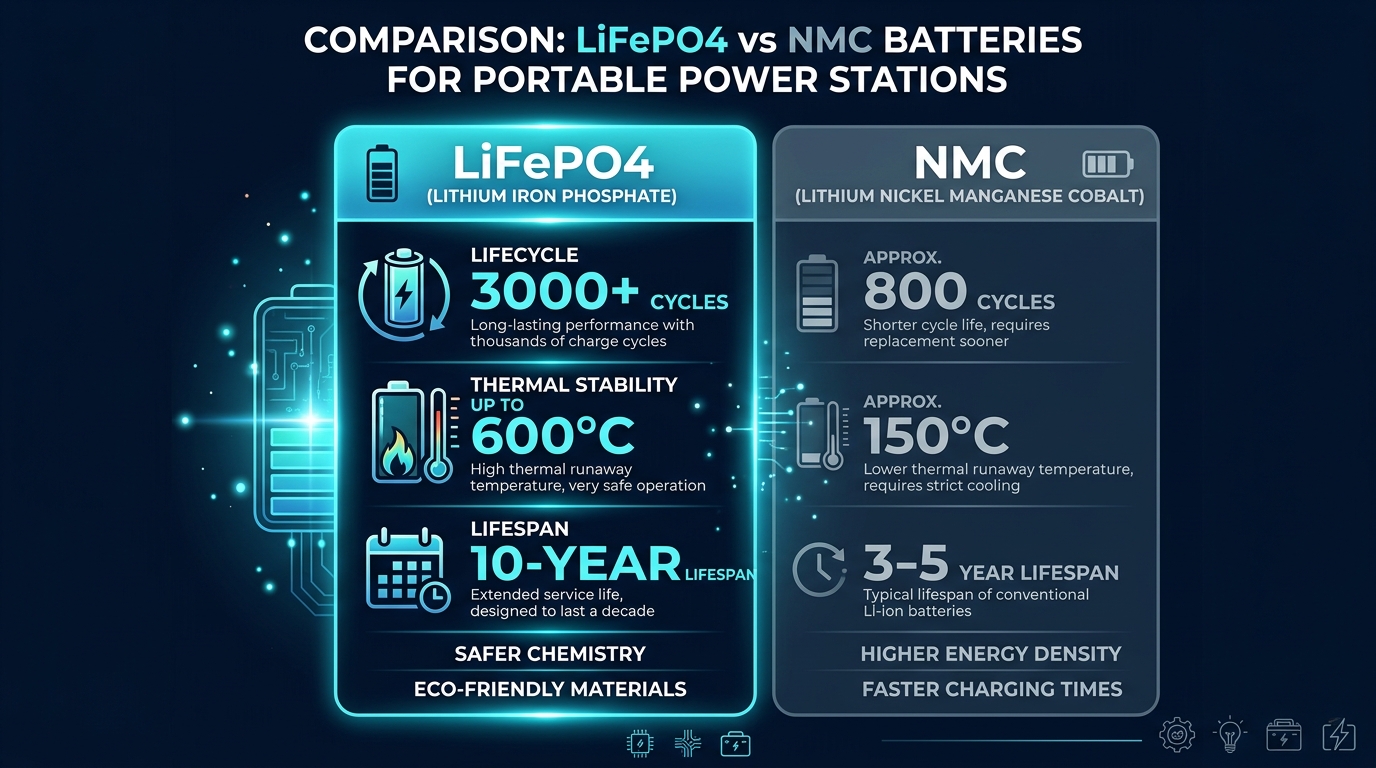
Evaluating battery chemistry, thermal safety, and cycle life ensures dependable backup power in compact living spaces.
1. Zero Emissions and Strict Indoor Safety
Safety is non-negotiable in shared residential buildings. Guidelines from Ready.gov and the National Fire Protection Association emphasize that only certified battery-based energy storage systems should be deployed inside residential dwellings during power emergencies.
Modern units built with Lithium Iron Phosphate (LiFePO4) chemistry feature exceptional thermal stability. They do not emit volatile organic compounds, release zero toxic gases during deep discharge, and present virtually zero risk of thermal runaway even if accidentally operated in warm rooms.
2. Physical Portability and Weight Distribution
In an apartment without ground-floor garage access, you may need to carry your equipment up flights of stairs or transfer it between rooms during an outage.
- Units under 12 pounds can be carried easily by anyone in a single hand.
- Units between 24 and 30 pounds provide massive energy storage while remaining manageable to lift onto kitchen countertops.
- Avoid 70-pound commercial units unless your building features elevator access and dedicated closet storage space.
3. Rapid AC Recharging Between Weather Bands
During major storms, power grids frequently fluctuate. You might regain utility power for two hours before a secondary line failure plunges the neighborhood back into darkness.
Older battery packs required seven to eight hours of continuous wall charging to refill. Premium modern units accept high-amperage grid input, charging from empty to eighty percent in under sixty minutes. This rapid recovery ensures your battery is fully replenished during brief utility restoration windows.
4. Noise Levels in Compact Rooms
When an outage strikes, an apartment becomes dead quiet. A power station whose internal cooling fans scream like a hair dryer will keep you awake all night. Look for models featuring intelligent thermal sensors and variable-speed low-decibel fans that operate below 48 decibels under moderate loads.
💡 Renter Compatibility: None of the portable units recommended in this guide require electrical modifications, transfer switches, or landlord permission. They function as standalone appliances that plug directly into your standard wall outlets, preserving your security deposit completely. For broader lease-friendly technology advice, check our guide to Smart Home for Renters.
In-Depth Reviews: The 5 Best Apartment Power Stations
1. EcoFlow DELTA 2: The Best Overall Apartment Workhorse
EcoFlow DELTA 2 Portable Power Station (1024Wh)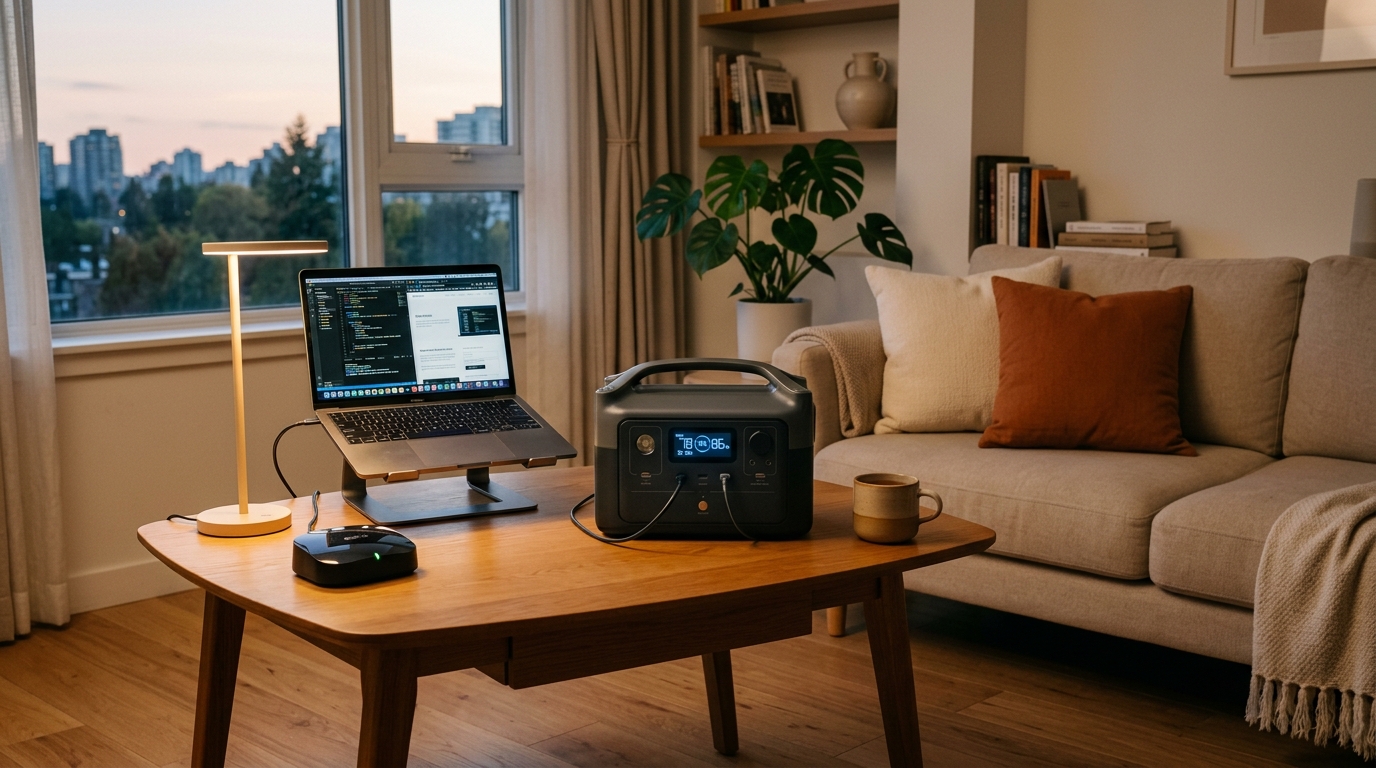
The EcoFlow DELTA 2 sits in the sweet spot of capacity, output wattage, and blistering recharge speed for compact rental living.
If you want a single backup unit capable of keeping your apartment functional through a twelve to twenty-four hour blackout, the EcoFlow DELTA 2 is the undisputed champion.
With 1,024 watt-hours of premium LiFePO4 battery storage, the DELTA 2 possesses enough raw energy to keep a full-sized residential refrigerator running for eight to twelve hours, charge a smartphone over sixty times, and power a home Wi-Fi network for two full days.
Its internal pure sine wave inverter outputs an impressive 1,800 watts of continuous AC power through six standard three-prong receptacles. This means you do not have to pick and choose between running a refrigerator or boiling water for baby formula; it handles heavy kitchen loads and microwave ovens without tripping overload alarms.
Where the DELTA 2 truly shines in apartment living is its recharge speed. When plugged into an ordinary AC wall receptacle, proprietary X-Stream technology pulls up to 1,200 watts, filling the battery from zero to eighty percent in just fifty minutes. If emergency storm warnings sound on your phone, you can top off the unit completely while you secure window latches and gather emergency drinking water.
Key Specifications:
- Battery Chemistry: LiFePO4 (3,000+ cycles to 80% capacity)
- Capacity: 1,024Wh (expandable to 2,048Wh with extra battery)
- AC Inverter Output: 1,800W continuous (2,700W surge)
- AC Outlets: 6 x 120V Pure Sine Wave
- Weight: 27.0 pounds
- Recharge Time: 50 minutes to 80%, 80 minutes to 100%
Apartment Assessment:
- The Good: Recharges faster than any competitor in its class; runs virtually any household appliance including high-draw microwaves; expandable design allows you to add battery capacity later without buying a new machine.
- The Tradeoff: Weighs 27 pounds, requiring deliberate two-handed lifting when moving between rooms.
- Best For: Renters and apartment owners who prioritize food preservation in their primary refrigerator alongside uninterrupted remote work capability.
2. Anker SOLIX C1000: Best Heavy-Duty Inverter Alternative
Anker SOLIX C1000 Portable Power Station (1056Wh)Anker has established a formidable reputation for durable electronic power delivery, and the SOLIX C1000 brings that build quality directly into home emergency preparedness.
Featuring 1,056 watt-hours of automotive-grade LiFePO4 battery capacity, the SOLIX C1000 matches the EcoFlow DELTA 2 in capacity while offering a uniquely rugged unibody structure designed to withstand accidental bumps and drops during high-stress outages.
Its 1,800-watt inverter features Anker SurgePad technology, allowing it to drive resistive heating devices up to 2,400 watts without shutting down. If you need to brew coffee, heat soup in an electric kettle, or operate a small portable space heater in a cold apartment, the SOLIX C1000 handles the load with authority.
One thoughtful feature specifically appreciated in small apartments is the wide, diffuse LED ambient light strip integrated directly across the front panel. When a blackout hits abruptly at 2:00 AM, you do not have to stumble in pitch blackness searching for a flashlight. Simply press the light button to illuminate your entire living room with a warm, eye-friendly glow.
Key Specifications:
- Battery Chemistry: LiFePO4 (3,000+ cycles to 80% capacity)
- Capacity: 1,056Wh (expandable to 2,112Wh)
- AC Inverter Output: 1,800W continuous (2,400W SurgePad mode)
- AC Outlets: 6 x 120V Pure Sine Wave
- Weight: 28.4 pounds
- Recharge Time: 58 minutes to 100% via UltraFast AC mode
Apartment Assessment:
- The Good: Integrated full-width ambient light bar; whisper-quiet fan profile under moderate loads; companion mobile app works via both Bluetooth and local Wi-Fi.
- The Tradeoff: Slightly heavier than the DELTA 2; AC power cables are a bit stiff in tight apartment corners.
- Best For: Households seeking high-output cooking capability, whisper-quiet evening operation, and built-in emergency room illumination.
3. EcoFlow RIVER 2: The Best Compact Nightstand & CPAP Pick
EcoFlow RIVER 2 Portable Power Station (256Wh)Not every apartment dweller needs to power a double-door kitchen refrigerator. If your primary goal is keeping your essential communication devices alive, powering medical equipment overnight, or running a laptop through a workday blackout, the EcoFlow RIVER 2 offers unmatched practicality.
Weighing just 7.7 pounds, the RIVER 2 is light enough to lift with two fingers. It tucks neatly onto a small bookshelf, bedroom nightstand, or desk without cluttering your living space. Despite its compact footprint, EcoFlow refused to compromise on battery longevity, outfitting the unit with genuine LiFePO4 chemistry rated for over three thousand cycles.
The RIVER 2 features two standard AC wall outlets delivering 300 watts of continuous power, alongside high-speed USB-C and USB-A charging ports. It fully recharges from a standard wall outlet in exactly sixty minutes. If you rely on a medical CPAP machine, keeping the RIVER 2 on your nightstand provides vital peace of mind, functioning as an automatic backup power supply that takes over seamlessly if grid power drops while you sleep.
Key Specifications:
- Battery Chemistry: LiFePO4 (3,000+ cycles to 80% capacity)
- Capacity: 256Wh
- AC Inverter Output: 300W continuous (600W X-Boost)
- AC Outlets: 2 x 120V Pure Sine Wave
- Weight: 7.7 pounds
- Recharge Time: 60 minutes to 100% via AC wall power
Apartment Assessment:
- The Good: Incredibly compact and lightweight; lightning-fast 60-minute wall recharge; outstanding price-to-performance ratio for entry-level emergency preparedness.
- The Tradeoff: Cannot power heavy kitchen heating appliances or full-sized refrigerators.
- Best For: Studio apartment residents, students, remote workers needing laptop insurance, and CPAP medical device users.
4. BLUETTI EB3A: The Best Feature-Dense Value Pick
BLUETTI Portable Power Station EB3A (268Wh)BLUETTI has consistently pushed the boundary on delivering commercial-grade features at accessible price points, and the BLUETTI EB3A is a shining example.
Packing 268 watt-hours of durable LiFePO4 storage, the EB3A sets itself apart from other sub-$250 units by incorporating a surprisingly muscular 600-watt continuous AC inverter capable of surging up to 1,200 watts. This increased inverter headroom means you can run small blenders, slow cookers, and desktop computer workstations that would immediately trigger overload errors on competing 300-watt batteries.
On the top panel of the chassis, BLUETTI included a convenient 15-watt wireless Qi charging pad. During a frantic outage, you simply set your smartphone directly on top of the power station without digging through drawers for lost USB charging cords.
The EB3A also features an integrated 100W USB-C Power Delivery port, allowing modern MacBooks and Windows ultrabooks to charge at maximum theoretical speed directly from DC circuitry, bypassing inverter conversion losses entirely.
Key Specifications:
- Battery Chemistry: LiFePO4 (2,500+ cycles to 80% capacity)
- Capacity: 268Wh
- AC Inverter Output: 600W continuous (1,200W surge)
- AC Outlets: 2 x 120V Pure Sine Wave
- Weight: 10.1 pounds
- Recharge Time: 80 minutes to 100% via Turbo AC mode
Apartment Assessment:
- The Good: High 600W inverter headroom uncommon in entry-level units; wireless phone charging pad on top; true sub-20ms UPS bypass capability.
- The Tradeoff: Cooling fan kicks on frequently under heavy loads and is slightly louder than the River 2.
- Best For: Budget-conscious renters seeking maximum wattage versatility, wireless charging convenience, and continuous home office UPS protection.
5. Jackery Explorer 300: Proven Durability for Grab-and-Go Mobility
Jackery Explorer 300 Portable Power Station (293Wh)Jackery is one of the most recognizable names in outdoor portable power, and the Explorer 300 represents years of refined, user-friendly industrial design.
Weighing an ultra-light 7.1 pounds, the Explorer 300 features a solid, ergonomic built-in carry handle that makes moving the unit around an apartment effortless. It houses 293 watt-hours of capacity with two pure sine wave AC outlets delivering 300 watts continuous.
While the Explorer 300 utilizes traditional NMC lithium chemistry rather than LiFePO4, Jackery battery management architecture has proven remarkably reliable over years of real-world use. The interface is completely devoid of confusing menus: a single physical button activates the AC outlets, while a second button engages the DC and USB array.
If you want a dependable emergency battery that doubles as a weekend companion for picnics, park outings, and vehicle road trips, the Explorer 300 remains a beloved household standard.
Key Specifications:
- Battery Chemistry: Lithium-ion (NMC)
- Capacity: 293Wh
- AC Inverter Output: 300W continuous (500W surge)
- AC Outlets: 2 x 120V Pure Sine Wave
- Weight: 7.1 pounds
- Recharge Time: 2 hours to 80% via AC wall adapter
Apartment Assessment:
- The Good: Extremely light and comfortable to carry; intuitive single-button operation suitable for tech novices; proven long-term hardware reliability.
- The Tradeoff: Utilizes older NMC chemistry (500 cycles to 80% capacity) rather than LiFePO4; recharge time is slower than the EcoFlow River 2.
- Best For: Renters seeking an ultra-simple, lightweight battery for dual use between home emergency prep and outdoor recreational camping.
Apartment Emergency Outage Sizing Guide
To understand how long these power stations will keep your essential gear operating during a real-world blackout, consult this practical runtime breakdown:
+-------------------------------------------------------------------------------+
|             APARTMENT APPLIANCE REAL-WORLD RUNTIMES                           |
+----------------------+-------------+--------------+-------------+-------------+
| Appliance / Device   | Typical     | 256Wh Pack   | 268Wh Pack  | 1024Wh Pack |
|                      | Draw (W)    | (River 2)    | (EB3A)      | (Delta 2)   |
+----------------------+-------------+--------------+-------------+-------------+
| Smartphone (Recharge)| 12W to 18W  | 15 recharges | 16 recharges| 65 recharges|
| Laptop (USB-C PD)    | 45W to 65W  | 3.5 recharges| 4 recharges | 14 recharges|
| Wi-Fi Router & Modem | 15W         | 14.5 hours   | 15 hours    | 58 hours    |
| Desktop Oscillating Fan| 35W       | 6.2 hours    | 6.5 hours   | 25 hours    |
| LED Desk Lamp        | 6W          | 36 hours     | 38 hours    | 145 hours   |
| CPAP Machine (No Heat)| 30W        | 7.2 hours    | 7.6 hours   | 29 hours    |
| Full-Size Refrigerator| 110W avg   | Cannot run   | Cannot run  | 8 to 11 hrs |
| 50-inch Smart TV     | 75W         | 2.9 hours    | 3.0 hours   | 11.5 hours  |
+----------------------+-------------+--------------+-------------+-------------+
⚡ Calculating Your Exact Runtime: Remember the standard eighty-five percent conversion efficiency rule. Multiply your power station watt-hours by 0.85, then divide that figure by your device wattage. For complete mathematical examples and appliance formulas, explore our pillar manual on Portable Power Stations: The Complete Buyer’s Guide.
5 Ways to Stretch Battery Reserves in an Apartment Blackout
In an apartment, you do not have unlimited solar roof access to refill batteries. Practicing smart power conservation is the most effective way to multiply your available energy reserves:
1. Power Tech Exclusively via Native DC Ports
Plugging a standard phone or laptop wall adapter into the 120V AC outlet forces the power station to convert direct battery current into alternating current, only for your charging brick to convert it right back to direct current.
This double conversion wastes ten to fifteen percent of your battery energy as unnecessary heat. Plug your phone and laptop cables directly into the built-in USB-C Power Delivery and USB-A ports on the power station faceplate.
2. Disconnect Idle Entertainment Vampire Loads
If you plug a television or desktop setup into your power station, ensure you are not powering idle accessories. Soundbars, subwoofers, video game consoles in standby mode, and secondary monitors constantly draw phantom wattage. Our investigative analysis on Vampire Power in Rentals highlights how eliminating standby draw preserves crucial battery hours.
3. Use Automated Smart Plugs Before Storms Arrive
Before severe weather knocks out utility lines, use energy monitoring smart plugs to identify which appliances pull the highest continuous wattage. To learn how to automate devices and capture energy metrics effortlessly, review our definitive manual: The Ultimate Guide to Smart Plugs. Furthermore, our roundup of the Best Smart Plugs for Apartments outlines top-rated plugs that fit tight apartment duplex sockets.
4. Practice Refrigerator Door Discipline
Your kitchen refrigerator is a heavily insulated thermal vault. Every time you open the refrigerator door during a power outage, cold air falls out and warm kitchen air floods in, forcing the electric compressor to run for twenty to thirty minutes when the door closes.
Keep the door closed as much as possible. A modern refrigerator will keep food safely cold for four hours without any power at all. Only plug your power station into the refrigerator during the second half of the day to pull temperatures back down safely.
5. Measure True Wattage with a Kill A Watt Meter
Never guess how many watts an appliance consumes. Label ratings on backplates indicate theoretical maximums rather than real running consumption. Using a simple plugin meter allows you to test your exact gear in advance. Learn how to conduct an audit using our walkthrough: How to Use a Kill A Watt Meter.
Frequently Asked Questions
Can I legally use a portable power station in a rental apartment?
Yes, absolutely. Portable power stations are consumer electronic appliances, completely identical in regulatory status to a large laptop battery or uninterruptible power supply. They produce zero exhaust emissions, create zero flammable gas hazards, and do not alter physical electrical wiring. Landlords, rental management companies, and HOA boards permit them universally.
Can I recharge a portable power station from an apartment balcony?
Yes, provided your balcony receives direct, unobstructed sunlight for several hours during the day. You can connect a compact 100-watt or 200-watt folding portable solar panel to the DC input port of your power station. However, sunlight filtering through double-pane window glass cuts solar efficiency by fifty percent or more, so placing panels outside on a patio railing or balcony floor yields far better results.
Will a portable power station run an apartment air conditioner?
It depends entirely on the air conditioner type. Standard window air conditioners pull massive startup surges that overwhelm compact battery units. However, high-efficiency inverter window units consuming 400 to 500 watts can operate on a 1,000Wh unit like the EcoFlow DELTA 2 for approximately two hours. For detailed cooling comparisons, read our guide on Portable AC vs Window Unit.
How often should I recharge my emergency battery if it sits in a closet?
Quality LiFePO4 power stations exhibit very low self-discharge rates. If stored at seventy to eighty percent charge in a temperature-controlled indoor closet, a unit will easily retain over seventy percent capacity after six months. As a best practice, pull the unit out every three to four months, discharge it down to twenty percent, and recharge it back to eighty percent to keep cell chemistry balanced.
What is the difference between pure sine wave and modified sine wave?
Pure sine wave power mimics the smooth, harmonic electrical wave supplied by municipal utility companies. Modified sine wave power produces jagged, blocky stair-step electrical pulses that cause sensitive electronics, laptop power bricks, and medical CPAP machines to hum, overheat, or fail completely. Every model recommended in this guide utilizes pure sine wave inverters exclusively.
Final Verdict: Which Apartment Power Station Fits You?
You do not need to own a three-bedroom suburban house or spend thousands on noisy gas engines to achieve genuine blackout security. By choosing the right battery capacity for your specific living space, you take complete control over your home comfort and safety:
+--------------------------------------------------------------------------+
|                     APARTMENT BUYER RECOMMENDATION MATRIX                |
|                                                                          |
|  1. FULL RESIDENTIAL PROTECTION (Fridge, Microwave, Wi-Fi, Multi-Day)   |
|     --> Choose: EcoFlow DELTA 2 (1,024Wh) or Anker SOLIX C1000 (1,056Wh) |
|                                                                          |
|  2. ESSENTIAL PERSONAL TECH & BEDROOM CPAP (Ultra-Light, Budget Friendly)|
|     --> Choose: EcoFlow RIVER 2 (256Wh)                                  |
|                                                                          |
|  3. MAXIMUM INVERTER VERSATILITY UNDER $250 (600W AC + Wireless Pad)     |
|     --> Choose: BLUETTI EB3A (268Wh)                                     |
|                                                                          |
|  4. SIMPLE OUTDOOR MOBILITY & CAMPING (Intuitive Controls, Durable)      |
|     --> Choose: Jackery Explorer 300 (293Wh)                             |
+--------------------------------------------------------------------------+
For most apartment dwellers seeking the gold standard in emergency readiness, the EcoFlow DELTA 2 remains our premier top recommendation. Its fifty-minute AC recharge velocity, 1,800-watt continuous inverter, and durable LiFePO4 battery pack ensure your food stays cold, your communication lines remain open, and your apartment stays safe no matter how long the local power grid remains offline.
For broader strategies on systematically reducing electric utility bills while living in a rental property, explore our complete handbook: The Ultimate Renter Energy Savings Guide.
Related reading
- Best DIY Balcony Solar Kits for Apartments and Renters
- EcoFlow vs Jackery vs Bluetti: Which Power Station Is Best for Blackouts?
- Portable Power Stations: The Complete Buyer’s Guide for Home Backup and Off-Grid Living
- The Ultimate Guide to Smart Plugs: Automate, Save Energy, and Lower Your Bills
- Smart Home for Renters: How to Make a Rented Place Feel Smart Without Drilling a Single Hole
For detailed guidance on ethical product testing methodologies, review our Editorial Policy.