Portable Power Stations: The Complete Buyer's Guide for Home Backup and Off-Grid Living
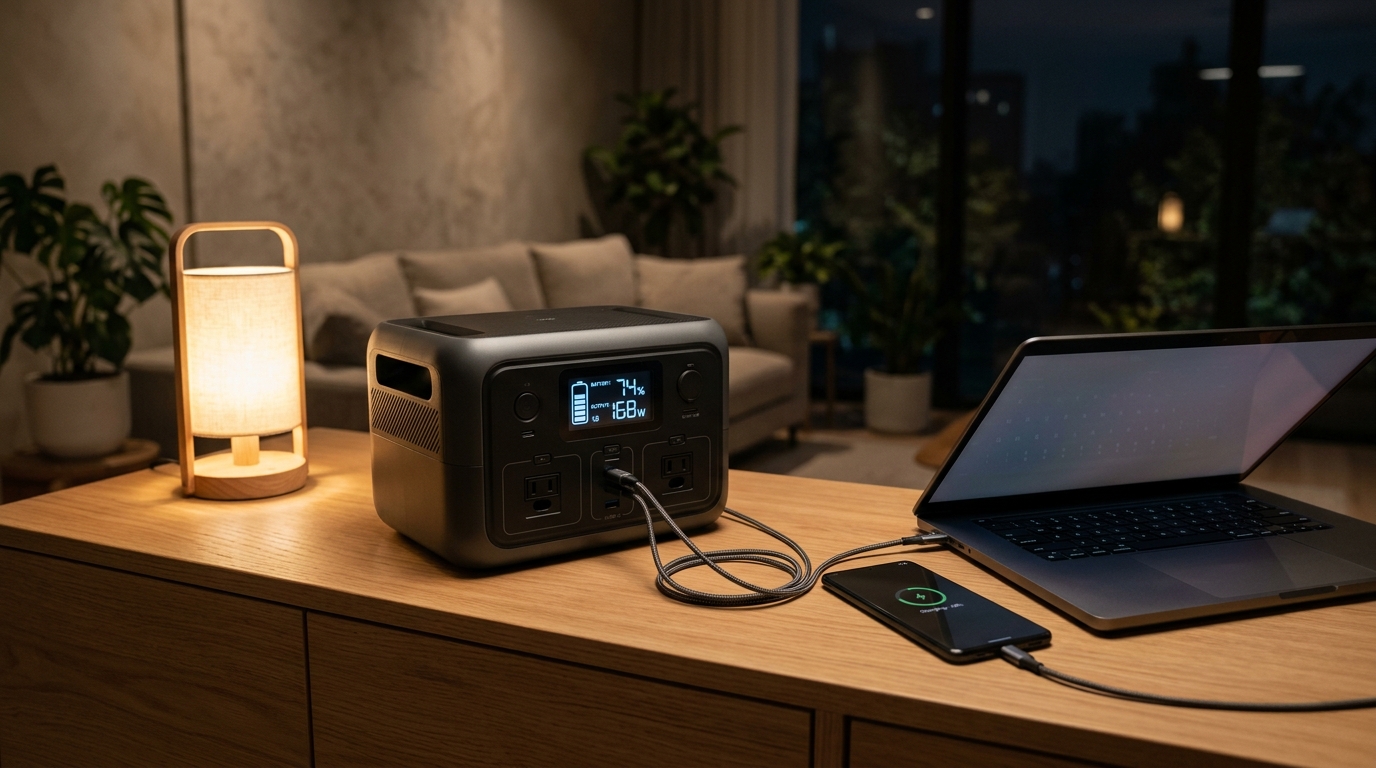
Portable power stations deliver quiet, fume-free electricity inside the home when the electrical grid goes dark.
By WattDweller Editorial Team · Updated October 17, 2026
Power outages used to feel like rare anomalies. Today, severe seasonal storms, strained regional electrical grids, and aging transmission infrastructure have made blackouts an inevitable reality for millions of households. When the power grid drops offline, our modern reliance on electricity becomes immediately apparent. Refrigerators warm up, food spoils, remote work grinds to an abrupt halt, medical equipment loses power, and smartphones quickly drain their remaining battery reserves.
For decades, the standard response to an electrical blackout was a combustion gas generator. While traditional gasoline generators deliver substantial raw wattage, they present serious compromises that make them completely unviable for many households. They produce deadly carbon monoxide exhaust, demand constant outdoor ventilation, roar at deafening decibel levels, require messy fuel stabilization, and are strictly prohibited in apartments, rental complexes, and suburban neighborhoods with tight property boundaries.
Portable power stations have completely reshaped the emergency preparedness landscape. Built around advanced lithium chemistry, solid-state electronics, and whisper-quiet pure sine wave inverters, these self-contained units provide clean, safe, instant electricity anywhere you need it. You can place one directly on your kitchen counter next to the refrigerator, keep one on your nightstand to run a medical CPAP machine, or slide one into your vehicle for weekend wilderness expeditions.
Navigating the modern power station marketplace can feel overwhelming. Technical specifications like watt-hours, continuous output, surge headroom, cycle life ratings, and charge controller topologies can confuse even savvy shoppers.
This comprehensive buyer guide serves as the authoritative foundation for our Backup Power Solutions series. In the sections below, we demystify the underlying technology, provide clear mathematical formulas for calculating appliance runtime, compare modern battery chemistries, and help you select the exact power station that matches your emergency backup requirements and budget.
What Is a Portable Power Station and How Does It Work?
A portable power station is often referred to as a solar generator or battery generator. In practical terms, it is an integrated, all-in-one energy storage and conversion appliance. Rather than assembling separate marine batteries, loose inverters, charging bricks, and rat nests of heavy cables, a modern power station houses every critical electrical component inside a durable, protective chassis.
+--------------------------------------------------------------------------+
|                       PORTABLE POWER STATION ARCHITECTURE                |
|                                                                          |
|  [DC Charging Inputs]                                                    |
|  - AC Wall Grid (Fast Charge) ───┐                                       |
|  - Solar Panels (MPPT Input)  ───┼──> [Smart Battery Management System]  |
|  - 12V Car Cigarette Port     ───┘               │                       |
|                                                  ▼                       |
|                                     [Lithium Battery Core]               |
|                                     (LiFePO4 or NMC Cells)               |
|                                                  │                       |
|                                                  ▼                       |
|       ┌──────────────────────────────────────────┴─────────────────┐     |
|       ▼                                                            ▼     |
|  [DC Power Distribution]                             [Pure Sine Inverter]|
|  - USB-C PD (Up to 100W/140W)                        - 120V AC Outlets   |
|  - USB-A Quick Charge                                - High Surge Control|
|  - 12V Regulated DC Outlets                          - 60Hz Clean Wave   |
+--------------------------------------------------------------------------+
Inside every unit, four core engineering modules work together seamlessly:
1. The High Capacity Lithium Battery Core
The foundation of the unit is its battery pack. This bank stores raw chemical energy at low direct current (DC) voltages, typically between 12 volts and 48 volts depending on the overall capacity of the machine.
2. The Battery Management System (BMS)
The battery management system acts as the central electronic brain of the machine. It continuously monitors every individual cell group within the battery pack hundreds of times per second. The system protects against over-voltage, under-voltage, short circuits, high temperature runaway, freezing temperatures, and excessive current draws. Without a sophisticated BMS, lithium batteries would degrade prematurely or pose significant safety hazards.
3. The Pure Sine Wave Inverter
Household appliances running on standard 120-volt wall receptacles require alternating current (AC) electricity that oscillates smoothly sixty times per second. The internal inverter converts stored DC battery voltage into pristine 120V AC household power. Premium power stations utilize pure sine wave inverters that produce electricity identical to, or often cleaner than, the utility power supplied to residential homes.
4. Advanced Charging Circuitry
Modern units incorporate high-speed bidirectional inverters or dedicated MPPT (Maximum Power Point Tracking) solar charge controllers. This allows the battery pack to safely absorb enormous amounts of energy quickly, recharging from zero to eighty percent in under an hour when connected to a standard electrical wall outlet.
Battery Chemistry: Why LiFePO4 Outclasses Traditional Lithium-Ion
One of the most consequential decisions you will make when choosing a power station relates to the chemical makeup of its internal battery cells. For years, consumer electronics and early generation power stations relied on Nickel Manganese Cobalt (NMC) lithium-ion chemistry. Today, the industry gold standard has firmly shifted toward Lithium Iron Phosphate, commonly abbreviated as LiFePO4 or LFP.
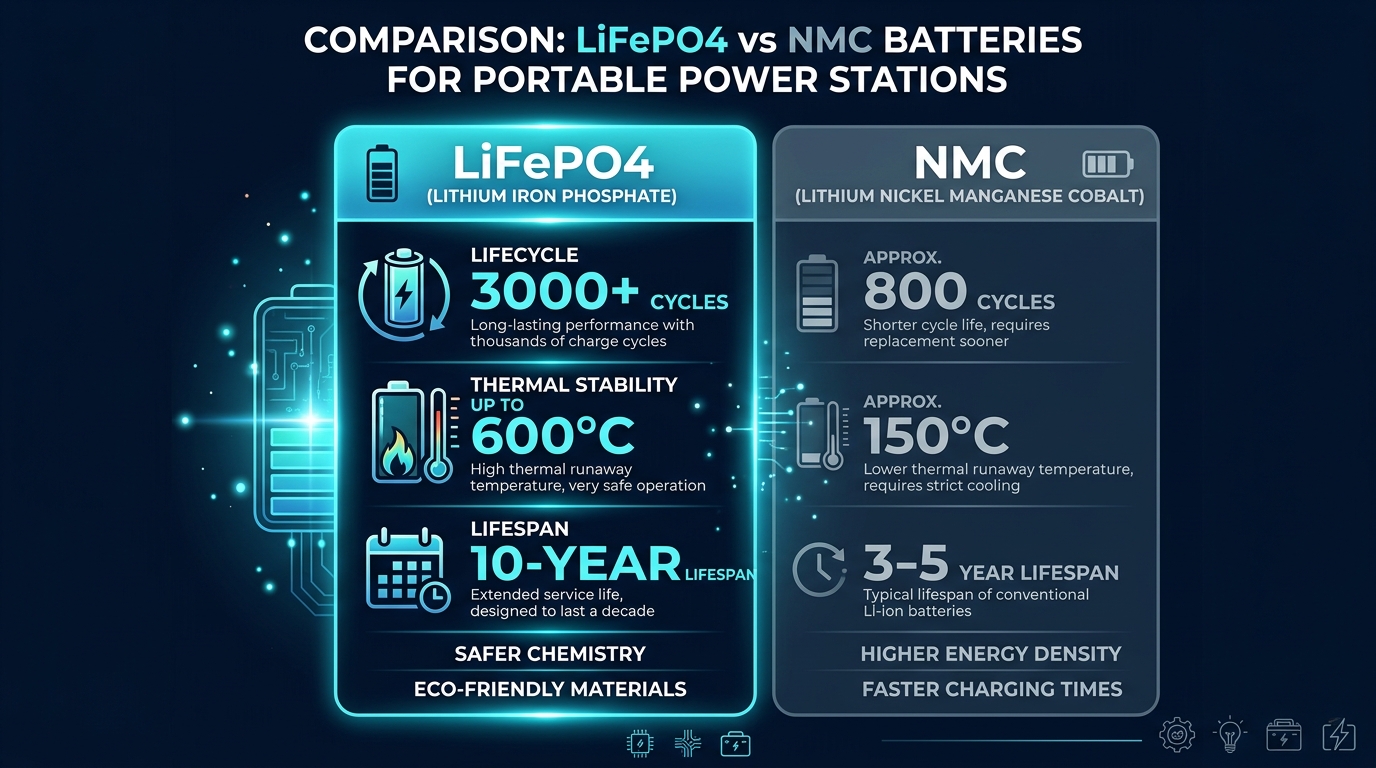
Understanding battery chemistry ensures your backup power station lasts for years without premature capacity loss.
The Longevity Revolution: Cycle Life Ratings
A battery cycle represents one complete discharge from full to empty, followed by one complete recharge back to full.
Traditional NMC lithium-ion batteries typically achieve five hundred to eight hundred cycles before their total usable capacity degrades to eighty percent of its original rating. If you use your unit frequently for camping, outdoor projects, or during regular power outages, an NMC battery can begin showing noticeable capacity loss within three to four years.
In stark contrast, modern LiFePO4 cells easily deliver three thousand to four thousand cycles before dropping to eighty percent capacity. To put this in everyday perspective:
- If you cycle a LiFePO4 power station every single day of the year, it will take nearly a decade of constant daily cycling to reach eighty percent retention.
- If you use your unit during seasonal emergency blackouts and several weekend camping trips per year, totaling thirty to fifty cycles annually, the battery cells will easily maintain reliable storage capacity for fifteen to twenty-five years.
Inherent Thermal Stability and Safety
LiFePO4 chemistry possesses exceptional thermal and chemical stability. The chemical bond between iron, phosphate, and oxygen atoms is structurally much stronger than the cobalt-oxygen bonds found in traditional lithium-ion packs.
As a consequence, LiFePO4 batteries can withstand substantially higher temperatures without decomposing. They are virtually immune to thermal runaway, will not ignite or explode even if punctured by accident, and emit zero hazardous fumes during operation or storage. For apartment dwellers and families keeping emergency equipment indoors, this safety margin provides invaluable peace of mind. For a dedicated evaluation of indoor rental constraints, consult our roundup of the Best Portable Power Stations for Apartments.
The Tradeoff: Weight and Energy Density
The only area where traditional NMC batteries maintain a slight edge is gravimetric energy density. NMC packs store more watt-hours per pound of physical weight. A 1,000 watt-hour NMC unit might weigh twenty-two pounds, whereas an equivalent 1,000 watt-hour LiFePO4 unit typically weighs between twenty-six and thirty pounds.
For true stationary home backup, vehicle-based travel, and apartment preparedness, the minor weight penalty of LiFePO4 is an overwhelmingly worthwhile tradeoff for six times the operating lifespan and vastly superior fire safety.
| Feature Comparison | Lithium Iron Phosphate (LiFePO4 / LFP) | Traditional Lithium-Ion (NMC) |
|---|---|---|
| Cycle Life (to 80% Capacity) | 3,000 to 4,000+ complete cycles | 500 to 800 complete cycles |
| Expected Lifespan | 10 to 15+ years of active use | 2 to 4 years of active use |
| Thermal Runaway Threshold | Approximately 518°F (270°C) | Approximately 410°F (210°C) |
| Chemical Safety | Extremely stable, no risk of fire or combustion | Vulnerable to thermal runaway under puncture |
| Weight per Watt-Hour | Slightly heavier (approx. 26 to 30 lbs per 1 kWh) | Slightly lighter (approx. 20 to 24 lbs per 1 kWh) |
| Recommended Use Case | Home emergency backup, daily off-grid living | Ultra-lightweight backpacking, compact camera gear |
💡 Key Takeaway: For any power station purchased today with a capacity greater than 250 watt-hours, insist on LiFePO4 battery chemistry. Buying an older NMC model to save a few dollars is a false economy when evaluated over the lifetime of the unit.
Understanding the Technical Metrics: Watts vs. Watt-Hours
The most common source of confusion among first-time buyers is the distinction between capacity and continuous power delivery. Manufacturers highlight numbers like 300W, 1000Wh, 1800W, and 2048Wh across their packaging. Knowing how to read these metrics ensures you do not buy a unit that fails when you plug your appliances into it.
+--------------------------------------------------------------------------+
|                      CAPACITY vs. POWER: THE WATER ANALOGY               |
|                                                                          |
|   WATT-HOURS (Wh) = Capacity of the Water Tank (How much total energy)   |
|   RUNNING WATTS (W) = Size of the Faucet (How fast energy can flow out)  |
|   SURGE WATTS (W) = Maximum burst when opening the valve suddenly        |
+--------------------------------------------------------------------------+
1. Watt-Hours (Wh): The Capacity of the Tank
Watt-hours represent the total quantity of energy stored within the battery pack. Think of watt-hours as the size of a fuel tank or water reservoir:
- A 300Wh battery stores enough theoretical energy to deliver 300 watts of electrical power for exactly one hour.
- Alternatively, that same 300Wh battery can power a 30-watt device for approximately ten hours.
2. Continuous Running Watts (W): The Size of the Pipe
Watts measure the instantaneous flow of electrical power. This rating indicates the maximum continuous load that the internal AC inverter can handle without shutting down from thermal or electrical overload:
- A high capacity 1,000Wh battery might feature a 600-watt inverter. While it has lots of stored energy, it cannot run a 1,500-watt hair dryer.
- Conversely, a unit with an 1,800-watt inverter can effortlessly run a full-sized microwave, coffee maker, or circular saw, even if its battery capacity is modest.
3. Surge Watts: Starting Inductive Motor Loads
Appliances containing electric compressors, pumps, or heavy inductive motors demand a massive burst of electrical current for a fraction of a second when starting up from a dead stop. Refrigerators, sump pumps, air conditioners, and power tools routinely draw three to five times their continuous running wattage for two or three seconds.
A quality power station features surge protection headroom that temporarily doubles its continuous output rating. For instance, an 1,800-watt continuous inverter should provide between 2,700 and 3,300 surge watts to overcome compressor startup spikes without triggering safety faults.
⚠️ Important Safety Rule: When sizing a power station for refrigeration or cooling equipment, you must account for startup surge rather than simple running wattage. A refrigerator that sips 120 watts while cooling can easily demand 1,000 to 1,200 surge watts the instant the compressor turns on.
How to Calculate Realistic Appliance Runtimes: The 85% Efficiency Rule
One critical mistake made by new owners is dividing the stated battery capacity directly by appliance wattage and expecting that mathematical maximum in the real world. Stored direct current must pass through voltage transformers and inverter electronics to become alternating current. Furthermore, the internal cooling fans, display screen, and BMS computer consume a small amount of operating overhead.
In real-world applications, quality pure sine wave inverters operate at approximately eighty-five to ninety percent electrical efficiency. To determine an accurate, dependable estimate of how long a power station will run your gear, apply this standard engineering formula:
$$\text{Actual Runtime (Hours)} = \frac{\text{Battery Capacity (Wh)} \times 0.85}{\text{Appliance Power Consumption (Watts)}}$$
Let us walk through a practical scenario. Suppose you experience a storm blackout and want to power a modern full-sized residential refrigerator using a 1,024Wh power station such as the EcoFlow DELTA 2.
Modern Energy Star refrigerators do not run their cooling compressors twenty-four hours a day. Over the course of an average hour, a refrigerator cycles on and off, averaging an effective power draw of approximately 90 to 120 watts.
Applying our formula: $$\text{Runtime} = \frac{1024 \times 0.85}{110} = \frac{870.4}{110} \approx 7.9 \text{ hours of continuous refrigeration}$$
By opening the refrigerator door only when strictly necessary, you reduce compressor runtime and stretch that single charge beyond ten to twelve hours.
+-------------------------------------------------------------------------------+
|             PRACTICAL RUNTIME REFERENCE GUIDE ACROSS APPLIANCES               |
+----------------------+-------------+--------------+-------------+-------------+
| Appliance / Device   | Typical     | 256Wh Pack   | 512Wh Pack  | 1024Wh Pack |
|                      | Draw (W)    | (River 2)    | (Mid-Size)  | (Delta 2)   |
+----------------------+-------------+--------------+-------------+-------------+
| Smartphone (Recharge)| 12W to 18W  | 15+ recharges| 30+ recharges| 65+ recharges|
| Laptop Computer (USB)| 45W to 65W  | 3.5 recharges| 7 recharges | 14 recharges|
| Wi-Fi Router & Modem | 12W to 20W  | 11 to 18 hrs | 22 to 36 hrs| 45 to 70 hrs|
| 40-Watt LED Lamp     | 8W (LED equiv)| 27 hours   | 54 hours    | 108 hours   |
| Medical CPAP (No Heat)| 25W to 40W | 5.5 to 8 hrs | 11 to 17 hrs| 22 to 34 hrs|
| 32-inch LED Smart TV | 45W to 60W  | 3.5 to 5 hrs | 7 to 10 hrs | 14 to 20 hrs|
| Full-Size Refrigerator| 100W to 150W| Not advised  | 3 to 4.5 hrs| 6 to 9 hrs  |
| Microwave Oven (700W)| 1050W actual| Cannot run   | Cannot run  | 45 minutes  |
| 1500W Space Heater   | 1500W       | Cannot run   | Cannot run  | 30 minutes  |
+----------------------+-------------+--------------+-------------+-------------+
The Inherent Inefficiency of Small DC Loads on AC Outlets
Notice an important pattern in the table above: running low-wattage electronics such as Wi-Fi routers and smartphones through the big three-prong 120V AC wall outlets wastes battery energy unnecessarily.
When you activate the AC inverter, the inverter circuitry itself draws five to twenty watts of continuous standby overhead just idling. If you plug a five-watt phone charger into a 120V AC receptacle, the power station might consume fifteen total watts to deliver five watts of power to your phone.
Whenever possible, power mobile devices, tablets, laptops, and CPAP machines directly through the native USB-C Power Delivery ports or 12V barrel outlets. Powering devices via DC circumvents the AC inverter entirely, boosting your operational efficiency from eighty-five percent up to ninety-five percent and saving precious watt-hours during an extended emergency.
💡 Measuring Real Baseline Consumption: Before guessing how many watts your appliances consume, plug them into a dedicated meter. Review our comprehensive guide on How to Use a Kill A Watt Meter to learn how to test electrical loads in your own home. Furthermore, our flagship The Ultimate Guide to Smart Plugs explains how to automate monitoring and kill phantom loads throughout your residence.
Evaluating the Three Core Power Station Categories
Power stations fall into three distinct practical categories based on their physical size, battery capacity, inverter capability, and portability. Selecting the right tier depends on whether your priority is lightweight mobility, weekend camping, or residential emergency survival.
+--------------------------------------------------------------------------+
|                       POWER STATION TIERS AT A GLANCE                    |
|                                                                          |
|  [TIER 1: ULTRA-PORTABLE]       [TIER 2: EMERGENCY WORKHORSE]            |
|  200Wh to 350Wh                750Wh to 1,200Wh                          |
|  7 to 12 lbs                   24 to 32 lbs                              |
|  Phones, Laptops, CPAP, Drone  Full Refrigerator, TV, Power Tools, Wi-Fi |
|                                                                          |
|                    [TIER 3: WHOLE-HOME BACKUP]                           |
|                    2,000Wh to 4,000Wh+ (Expandable)                      |
|                    48 to 90+ lbs (With wheels)                           |
|                    High-drain Microwaves, Well Pumps, Multiple Days      |
+--------------------------------------------------------------------------+
Tier 1: The Compact Mobile Class (200Wh to 350Wh)
- Typical Weight: 7 to 12 pounds
- Typical Continuous Inverter Rating: 300W to 600W
- Who It Serves Best: Remote workers, digital nomads, apartment dwellers seeking basic device insurance, tent campers, and medical CPAP users traveling overnight.
- What It Can Power: Smartphones, tablets, USB-C laptops, camera batteries, LED desk lamps, drone packs, Wi-Fi modems, and low-draw medical equipment.
- Limitations: Cannot operate heating appliances, hair dryers, microwaves, or full-sized kitchen refrigerators.
Tier 2: The Mid-Size Emergency Workhorse (750Wh to 1,200Wh)
- Typical Weight: 24 to 32 pounds
- Typical Continuous Inverter Rating: 1,200W to 1,800W
- Who It Serves Best: The definitive sweet spot for suburban homeowners and apartment residents who need genuine food preservation and communication during blackouts lasting twelve to twenty-four hours.
- What It Can Power: Everything in Tier 1 plus full-sized residential refrigerators, home entertainment centers, desktop gaming computers, slow cookers, CPAP machines with heated humidifiers, sump pumps, and basic kitchen appliances.
- Limitations: Heavy to carry over long distances on foot. Cannot run central home air conditioning systems or electric clothes dryers.
Tier 3: The Heavy-Duty Residential Hub (2,000Wh to 3,500Wh+)
- Typical Weight: 48 to 85+ pounds (frequently equipped with luggage-style telescoping handles and rugged wheels)
- Typical Continuous Inverter Rating: 2,400W to 3,600W
- Who It Serves Best: Rural households facing multi-day winter storms, homeowners with deep freeze chests and well pumps, serious overland van lifers, and job-site contractors running heavy power tools.
- What It Can Power: Heavy cooking appliances, portable air conditioning units, high-draw space heaters, large microwaves, well pumps, and simultaneous multi-room emergency circuits.
- Limitations: High upfront capital investment, substantial physical footprint, and difficult to lift upstairs without assistance.
The Best Portable Power Stations of 2026: Tested Recommendations
Our editorial team evaluated the market against five rigorous criteria: battery chemistry longevity, inverter performance under heavy inductive surge loads, AC and solar recharge velocity, real-world noise levels, and software stability. Below are the top verified selections available today.
1. Best Overall Home Emergency Unit: EcoFlow DELTA 2
EcoFlow DELTA 2 Portable Power Station (1024Wh)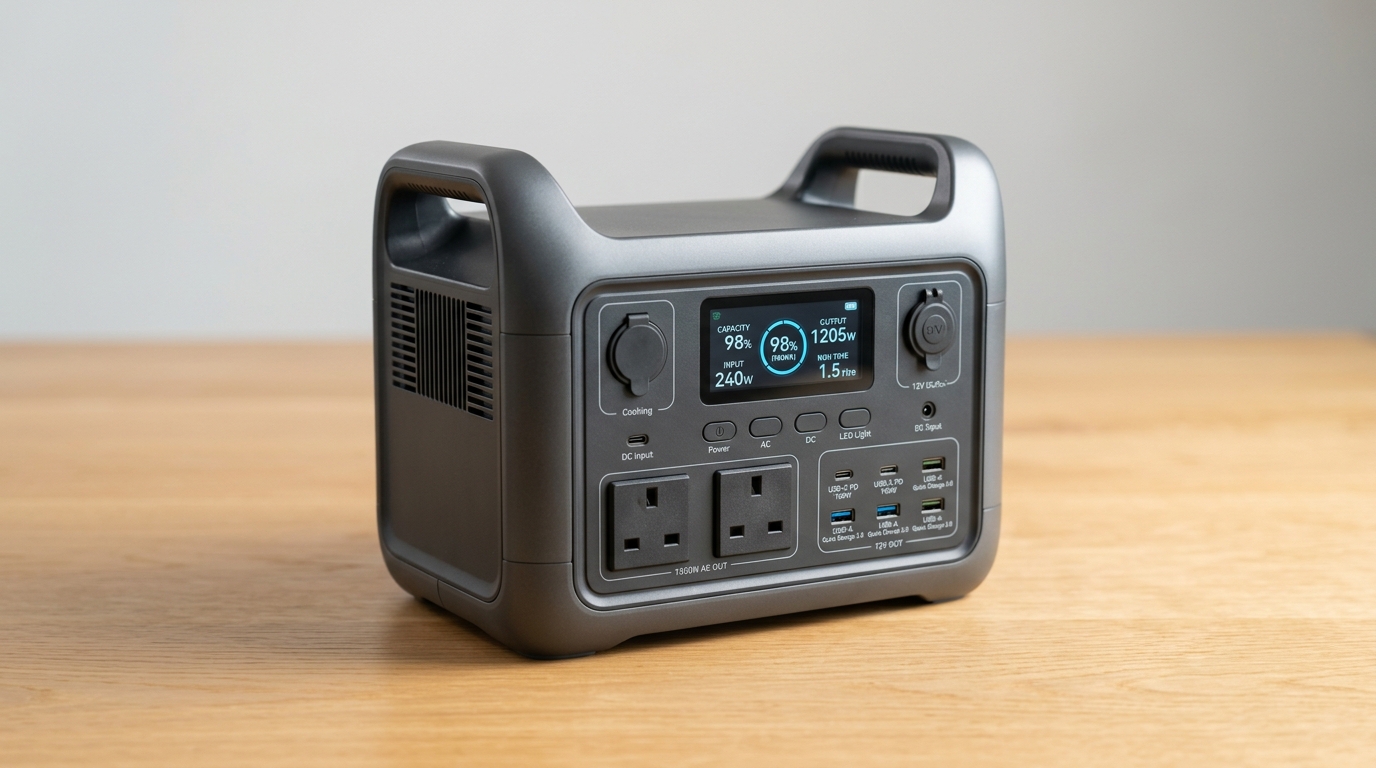
The EcoFlow DELTA 2 delivers the most versatile combination of capacity, inverter power, and blistering recharge speed.
The EcoFlow DELTA 2 represents the benchmark against which all other mid-sized emergency generators are measured. Built around a durable 1,024Wh LiFePO4 battery pack rated for over three thousand cycles, it outputs 1,800 watts of continuous pure sine wave power through six standard 120V AC receptacles.
Where the DELTA 2 truly leaves competitors behind is its proprietary X-Stream charging technology. When plugged into a standard wall outlet, it recharges from zero to eighty percent in just fifty minutes, reaching a full one hundred percent charge in eighty minutes. If local storm warnings sound and bad weather approaches rapidly, you can top off the unit completely in the time it takes to pack emergency supplies.
Additionally, the DELTA 2 supports expandable capacity. An external battery port on the side of the chassis allows you to connect an auxiliary DELTA 2 Extra Battery or DELTA Max battery pack, immediately doubling your total storage capacity to 2,048 watt-hours without requiring you to purchase a second inverter.
- Battery Chemistry: LiFePO4 (3,000+ cycles to 80% capacity)
- Capacity: 1,024Wh (expandable up to 2,048Wh)
- AC Inverter Output: 1,800W continuous (2,700W surge)
- Weight: 27 pounds
- Recharge Time: 50 minutes to 80% via AC wall power
- Solar Input: 500W maximum (11V to 60V, 15A)
2. Best High-Output Heavy-Duty Workhorse: Anker SOLIX C1000
Anker SOLIX C1000 Portable Power Station (1056Wh)Anker has brought its electronic power engineering expertise to the home backup category with the SOLIX C1000. Featuring a robust unibody drop-proof construction and automotive-grade LiFePO4 battery cells, the unit delivers 1,056 watt-hours of capacity with an industry-leading 1,800-watt continuous inverter capable of boosting up to 2,400 watts through its SurgePad technology.
The SOLIX C1000 recharges from an AC outlet to full capacity in just fifty-eight minutes using its UltraFast charging mode. It features an integrated ambient LED light bar across the front panel, providing gentle, diffuse room illumination during sudden blackouts without requiring you to search for flashlights in the dark.
- Battery Chemistry: LiFePO4 (3,000+ cycles to 80% capacity)
- Capacity: 1,056Wh (expandable up to 2,112Wh)
- AC Inverter Output: 1,800W continuous (2,400W SurgePad mode)
- Weight: 28.4 pounds
- Recharge Time: 58 minutes to 100% via AC wall power
- Solar Input: 600W maximum
3. Best Value Compact Field Unit: EcoFlow RIVER 2
EcoFlow RIVER 2 Portable Power Station (256Wh)For individuals who want dependable emergency power in a lightweight chassis that anyone can pick up with one hand, the EcoFlow RIVER 2 is a masterpiece of compact engineering. Weighing just 7.7 pounds, it packs 256 watt-hours of LiFePO4 energy storage.
The unit features two standard AC outlets delivering 300 watts of continuous power (with an X-Boost mode supporting resistive loads up to 600 watts). It fully recharges from zero to one hundred percent in a blistering sixty minutes via an ordinary wall receptacle. It is the perfect bedside backup unit for keeping smartphones, rechargeable lanterns, laptops, and CPAP machines running when a localized grid disruption occurs.
- Battery Chemistry: LiFePO4 (3,000+ cycles to 80% capacity)
- Capacity: 256Wh
- AC Inverter Output: 300W continuous (600W X-Boost surge)
- Weight: 7.7 pounds
- Recharge Time: 60 minutes to 100% via AC
- Solar Input: 110W maximum
4. Best Budget LiFePO4 with Wireless Charging: BLUETTI EB3A
BLUETTI Portable Power Station EB3A (268Wh)BLUETTI was one of the earliest pioneers to transition its entire product line to durable LiFePO4 chemistry. The EB3A delivers remarkable value in the entry-level tier. It features 268 watt-hours of storage paired with an unusually potent 600-watt continuous AC inverter capable of handling small kitchen appliances and power tools that would overwhelm other budget units.
On top of the machine sits a convenient 15-watt wireless Qi charging pad, allowing you to top up smartphones simply by setting them down. The unit also includes a dedicated 100W USB-C Power Delivery port, allowing high-performance modern laptops to recharge at full speed without needing an external AC adapter brick.
- Battery Chemistry: LiFePO4 (2,500+ cycles to 80% capacity)
- Capacity: 268Wh
- AC Inverter Output: 600W continuous (1,200W surge)
- Weight: 10.1 pounds
- Recharge Time: 80 minutes to 100% via Turbo AC mode
- Solar Input: 200W maximum
5. Proven Reliability for Outdoor Living: Jackery Explorer 300
Jackery Explorer 300 Portable Power Station (293Wh)Jackery is synonymous with outdoor recreation and camping dependability. The Explorer 300 is an extremely refined portable battery that excels in weekend camping trips, tailgate gatherings, and mobile field production.
Weighing just 7.1 pounds, the unit delivers 293 watt-hours of capacity through two pure sine wave AC receptacles rated at 300 watts continuous. While the Explorer 300 utilizes traditional NMC lithium chemistry rather than LiFePO4, its exceptional build quality, intuitive single-button interface, and rock-solid reliability make it an enduring favorite for outdoor enthusiasts seeking lightweight packability.
- Battery Chemistry: Lithium-ion (NMC)
- Capacity: 293Wh
- AC Inverter Output: 300W continuous (500W surge)
- Weight: 7.1 pounds
- Recharge Time: 2 hours to 80% via AC wall charger
- Solar Input: 90W maximum
5 Crucial Features Most Buyers Overlook
When comparing product spec sheets, it is easy to focus exclusively on watt-hours and price. However, real-world satisfaction often hinges on these five subtle technical characteristics:
1. Uninterruptible Power Supply (UPS) Functionality
Can the power station stay permanently plugged into the wall while your desktop computer or medical CPAP machine is plugged into the power station?
Units with true EPS (Emergency Power Supply) or UPS circuitry pass grid electricity directly through to your connected appliances under normal conditions. The internal battery sits at the ready without degrading. When the utility grid experiences a sudden blackout, internal solid-state switches transfer the load to battery power in under twenty milliseconds. That switchover occurs so rapidly that sensitive computer hardware, external storage drives, and home Wi-Fi routers will not reboot or shut down.
2. AC Recharge Velocity
Early generation power stations required seven to ten hours connected to a heavy external charging transformer brick to regain full capacity. If a severe blizzard or hurricane is bearing down on your region within three hours, a slow-charging battery is a major liability. Modern units with integrated fast-charging inverters accept up to 1,200 watts from an ordinary wall outlet, charging from dead to full in approximately one hour.
3. Solar Input Voltage and MPPT Technology
Every reputable power station incorporates an MPPT (Maximum Power Point Tracking) solar charge controller. The controller continuously monitors the fluctuating voltage and current output from connected solar panels, dynamically adjusting electrical resistance to extract the absolute maximum wattage possible under varying cloud cover.
Pay close attention to the open circuit voltage (Voc) input limits. A power station with a broad 11V to 60V solar window provides immense flexibility, allowing you to connect rigid rooftop residential panels as well as lightweight folding panels.
4. Acoustic Noise Levels and Cooling Fan Profiles
Inverters generate heat during DC to AC conversion, requiring internal cooling fans. In cheaper models, small high-RPM fans screech aggressively whenever an AC appliance draws more than one hundred watts. Premium units utilize larger, low-RPM fan blades and intelligent thermal sensors that keep acoustic noise under forty-five decibels, allowing you to sleep peacefully with the unit running in your bedroom.
5. Regulated 12V DC Automobile Ports
Older power stations supplied unregulated 12V DC power that followed the declining voltage curve of the internal battery. When the battery dropped to thirty percent capacity, the DC port dropped from 12.6V down to 10.5V, causing portable 12V car refrigerators and CPAP machines to shut off prematurely due to low voltage error codes. Modern units feature strictly regulated 12V outputs that maintain a steady 13.6 volts regardless of whether the battery is at ninety-nine percent or five percent.
Recharging Strategies During Extended Blackouts
A battery backup is only as good as your strategy for refilling it when the outage stretches into multiple days. An empty power station sitting in a darkened home provides zero utility. To ensure true resilience, establish a multi-tiered recharging protocol:
[OUTAGE DAY 1] ──> Pre-charged 100% capacity from the home wall outlet
[OUTAGE DAY 2] ──> Folding Solar Panels deployed on balcony or sunny yard (MPPT input)
[OUTAGE DAY 3] ──> 12V Auxiliary Car Alternator charge during essential travel trips
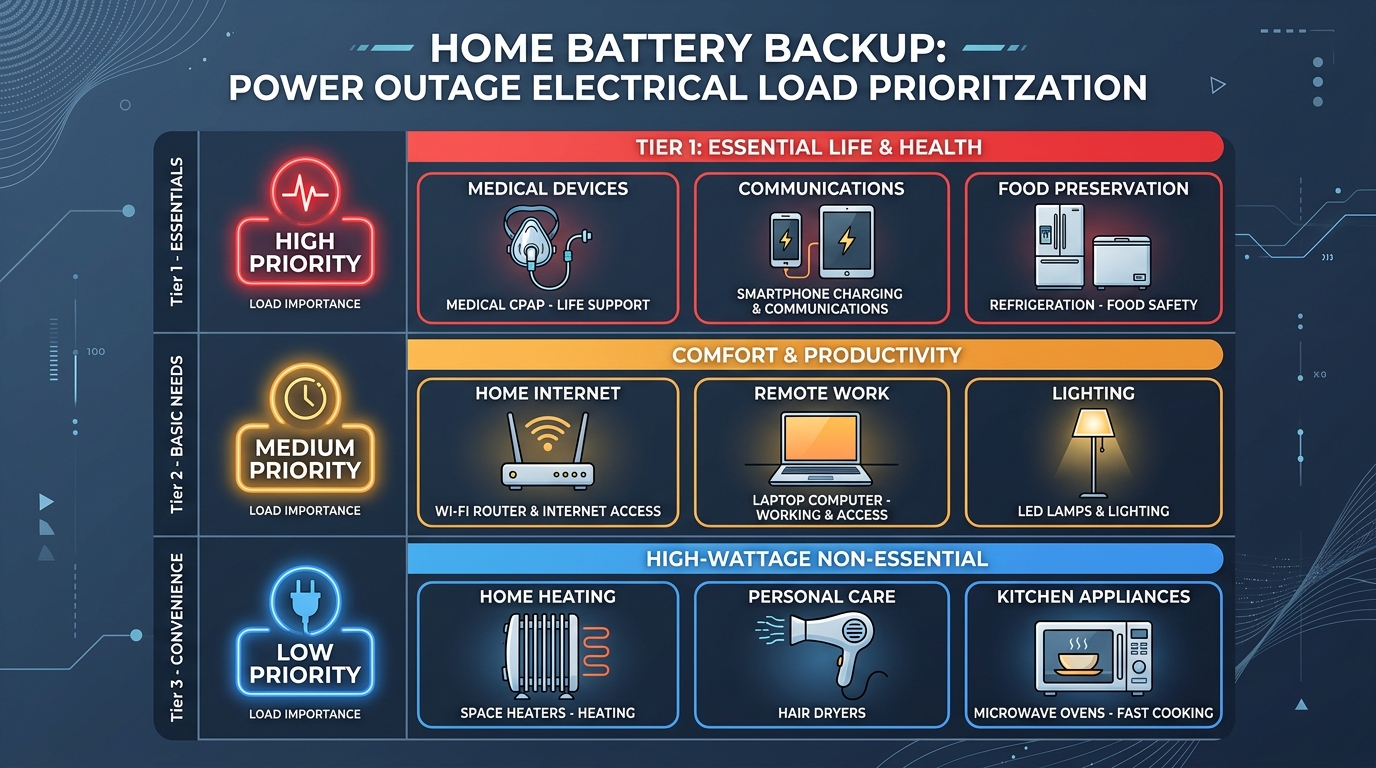
Prioritizing critical loads preserves battery reserves for essential medical, refrigeration, and communication needs.
1. Pre-Storm Grid Top-Off
Monitor regional weather alerts diligently. When a high-wind advisory, winter ice warning, or severe thunderstorm front threatens your area, connect your power stations immediately to ensure one hundred percent charge before the first tree branch contacts a transmission line.
2. Solar Recharging in the Field
Solar panels represent the only completely self-sustaining recharge method when grid electricity is unavailable for extended periods. Even in suburban environments or rental apartments, folding portable solar blankets can be set out on a south-facing balcony, patio, or lawn.
Connecting a single 200-watt portable solar panel to a unit like the EcoFlow DELTA 2 yields between 600 and 1,000 watt-hours of fresh energy on a clear sunny day, enough to replenish the power consumed by your refrigerator overnight. To learn how to select, size, and wire photovoltaic panels, explore our comprehensive manual: Achieve Energy Independence: DIY Solar, Wind, and Alternative Energy Solutions.
3. Vehicle Alternator Emergency Charging
Every quality unit includes a 12-volt car charging cable that plugs into a vehicle auxiliary cigarette lighter socket. A vehicle alternator produces steady DC power while the engine idles or while you run essential driving errands.
A standard 12V/8A automobile port delivers approximately ninety-six to one hundred watts of continuous power. While charging a large 1,000Wh pack takes eight to ten hours via this method, it provides a vital emergency lifeline if heavy cloud cover prevents solar charging.
5 Practical Strategies to Double Your Emergency Battery Life
During a prolonged blackout, energy conservation is just as valuable as battery capacity. Practicing aggressive power discipline extends your operating duration dramatically:
1. Eliminate Standby Vampire Draw on Inverters
Turn off the AC inverter switch whenever you are not actively powering an AC appliance. When the green AC light remains illuminated on your power station, the inverter consumes ten to twenty-five watts continuously in idle standby. Over twenty-four hours, that idle overhead drains 240 to 600 watt-hours, effectively consuming half of your battery capacity without running a single appliance.
2. Leverage Native DC Outputs for Personal Tech
Never plug standard phone wall adapters into the 120V AC receptacles. Connect charging cables directly to the native USB-C and USB-A ports on the power station faceplate. Bypassing the AC inverter boosts conversion efficiency by ten to fifteen percent.
3. Practice Deep Refrigerator Pre-Cooling
If you know severe weather is approaching twelve hours in advance, lower your refrigerator and freezer thermostat settings to their coldest allowable temperatures while the power grid is still live.
When the blackout begins, return the thermostat to normal settings. Because the thermal mass of the food is pre-chilled, the compressor will not need to turn on for the first four to six hours of the outage.
4. Optimize Lighting Circuits
Do not run high-wattage floor lamps from your emergency battery. Modern LED rechargeable camping lanterns and battery-powered task lights consume fractions of a watt. For comprehensive information on modern low-consumption lighting, explore our guide on the Best LED Bulbs for Renters.
5. Isolate Parasitic Loads Across Connected Strips
If you connect an entertainment center or computer desk to your power station, ensure you are not accidentally powering idle monitors, game consoles, and subwoofer amplifiers. Our detailed investigation into Vampire Power in Rentals highlights the hidden electronic culprits that drain stored power silently.
Storage, Maintenance, and Long-Term Health
One of the great advantages of lithium power stations over combustion generators is their minimal maintenance requirements. There are no carburetors to gum up, no spark plugs to clean, and no motor oil to change. However, lithium batteries still obey chemical laws. Adhering to these guidelines ensures your unit remains in peak operational condition when an unexpected crisis occurs:
The 80 Percent Storage Rule
Never store a lithium power station at zero percent capacity, and avoid storing it at one hundred percent capacity for extended months in warm closets. The ideal storage charge for long-term cell health is between sixty and eighty percent. At this resting voltage, internal chemical stress on the cathode and anode is minimized.
Establish a Quarterly Maintenance Routine
Lithium battery packs experience a minor self-discharge rate of approximately two to five percent per month due to the continuous background monitoring of the BMS.
Mark your calendar once every three months:
- Turn on the unit and check the state-of-charge percentage.
- Discharge the unit down to approximately twenty percent by running a household appliance.
- Recharge the unit back up to eighty percent using clean wall power.
- Wipe the air intake grilles clean of household dust or pet hair with a dry microfiber cloth.
Temperature Storage Safeguards
Store your equipment inside the conditioned envelope of your home, such as a closet, home office, or utility room. Never leave your primary emergency battery in an uninsulated garage, outdoor storage shed, or the trunk of a vehicle during extreme summer heat or sub-freezing winter storms.
Extreme heat degrades electrolyte compounds rapidly, while charging a lithium battery at temperatures below 32°F (0°C) can cause irreversible lithium plating on the anodes, destroying cell capacity and creating internal short circuits. Quality units contain internal temperature sensors that automatically prevent charging when ambient temperatures drop below freezing.
Frequently Asked Questions
Can a portable power station power a home refrigerator during an outage?
Yes. A mid-sized power station with a capacity of roughly 1,000 watt-hours and an inverter rated for 1,200 watts continuous or higher can run a standard residential refrigerator for eight to fourteen hours, depending on ambient kitchen temperatures and how often the door is opened. To extend runtime over several days, connect an auxiliary solar panel during daytime hours to replenish consumed watt-hours.
Can I leave my power station plugged into the wall permanently?
Yes, provided the model features a designated EPS or UPS bypass mode, such as the EcoFlow DELTA 2 or Anker SOLIX C1000. In bypass mode, current flows directly from the wall outlet into your connected devices without passing through the battery, preventing premature cell degradation while keeping the battery fully primed for an outage.
What is the practical difference between a solar generator and a portable power station?
They are fundamentally identical devices. The term solar generator is simply a marketing designation used when a portable power station is bundled with folding solar panels. Without solar panels, the power station recharges from standard AC electrical outlets or 12V automobile ports.
Can a portable power station be safely operated inside a closed bedroom?
Yes, absolutely. Unlike combustion gasoline generators that emit lethal carbon monoxide exhaust, portable power stations produce zero emissions, zero fumes, and zero toxic gases. They are completely safe for bedrooms, living rooms, tents, and tight recreational vehicles.
Can a power station run a portable or window air conditioner?
Running an air conditioning unit demands substantial electrical power. A high-efficiency inverter window air conditioner (such as those analyzed in our Portable AC vs Window Unit guide) consuming 400 to 600 watts can operate on a 1,000Wh to 2,000Wh power station for two to four hours. Traditional non-inverter air conditioners produce massive startup surges that require heavy-duty Tier 3 units rated for 2,000 watts continuous or higher.
How long does a LiFePO4 power station hold its charge in a closet?
Quality LiFePO4 power stations feature extremely low self-discharge rates. If stored in a temperature-controlled environment at eighty percent capacity, a unit will retain over seventy percent of its charge after six months of sitting idle. However, checking and topping off the battery every three to four months is strongly recommended.
Can I connect a power station to my home breaker panel via a transfer switch?
Yes. Larger power stations can be connected directly to a manual transfer switch or interlock kit installed by a licensed electrician. This allows you to power designated household circuits, such as lighting, kitchen outlets, and internet routers, directly through existing wall switches without running extension cords across living room floors.
The Verdict: Which Power Station Should You Buy?
Building home resilience does not require thousands of dollars in commercial rewiring or noisy gasoline tanks. By investing in the right portable battery hardware, you secure quiet, dependable electrical peace of mind for you and your family.
+--------------------------------------------------------------------------+
|                      RECOMMENDED BUYING BLUEPRINT                        |
|                                                                          |
|  SCENARIO 1: Basic Apartment Emergency & Travel                          |
|  Pick: EcoFlow RIVER 2 (256Wh) or BLUETTI EB3A (268Wh)                   |
|  Focus: Phones, Laptops, Wi-Fi, CPAP, Under $250                         |
|                                                                          |
|  SCENARIO 2: Definitive Home Outage Protection & Refrigeration           |
|  Pick: EcoFlow DELTA 2 (1024Wh) or Anker SOLIX C1000 (1056Wh)            |
|  Focus: Full-Size Refrigerator, TV, Microwave, Medical, Expandable       |
|                                                                          |
|  SCENARIO 3: Lightweight Backpacking & Outdoor Photography               |
|  Pick: Jackery Explorer 300 (293Wh)                                      |
|  Focus: Minimum Weight, High Portability, Proven Durability              |
+--------------------------------------------------------------------------+
For most households seeking true blackout readiness, the EcoFlow DELTA 2 remains our premier recommendation. Its combination of durable LiFePO4 chemistry, blistering fifty-minute recharge speeds, 1,800-watt inverter capability, and modular battery expandability provides the ideal balance between everyday convenience and serious disaster preparedness.
To explore how energy monitoring and home automation can systematically lower your electricity bills before an emergency occurs, consult our cornerstone blueprint: The Ultimate Renter Energy Savings Guide.
Related reading
- Achieve Energy Independence: DIY Solar, Wind, and Alternative Energy Solutions
- EcoFlow vs Jackery vs Bluetti: Which Power Station Is Best for Blackouts?
- Best Portable Power Stations for Apartments: Safe, Quiet Indoor Backup
- The Ultimate Guide to Smart Plugs: Automate, Save Energy, and Lower Your Bills
- How to Use a Kill A Watt Meter: The Renter’s Guide to Finding Energy Hogs
- Vampire Power in Rentals: 7 Hidden Devices Quietly Inflating Your Electricity Bill
For detailed guidance on ethical product testing methodologies and editorial integrity, review our Editorial Policy.